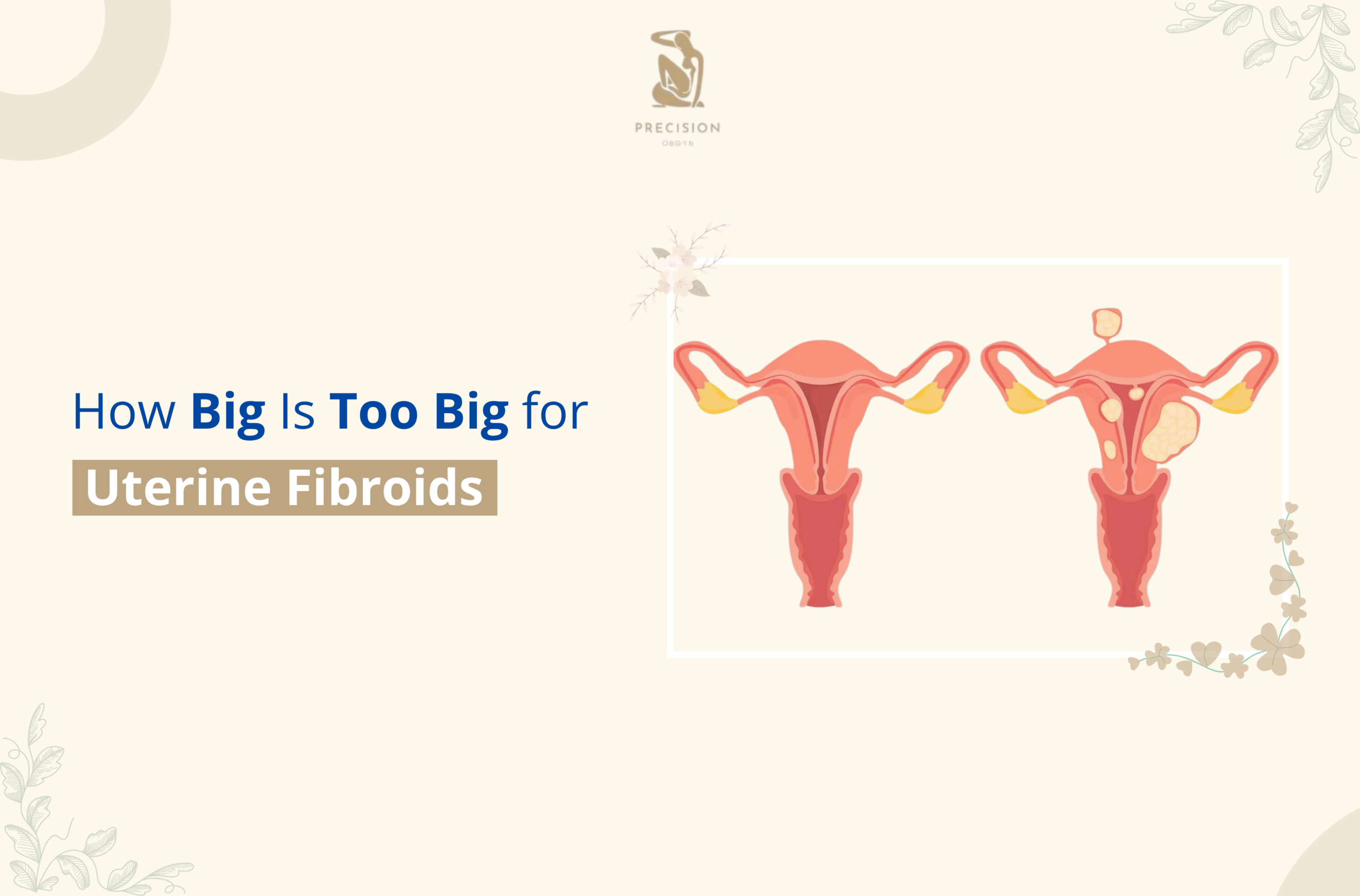
Uterine fibroids are lumps. They can grow inside or outside the uterus. Many are small. Some are larger. Some never cause any trouble. The others may cause pain, heavy periods, pressure, or swelling of the belly.
A common question is, what size of uterine fibroids is too big?
The straightforward solution is as follows: size counts; however, symptoms count as well. Even such a tiny fibroid causes many problems. A larger fibroid can be of no trouble or very little trouble. Still, larger fibroids might need more care. They can press on other organs and make daily life harder.
At Precision OBGYN, we make women aware of their fibroids and the next course of action. We support women who have regular or heavy periods. We also help with pelvic pain, fibroids, and other health issues. We’re glad to listen. We’ll check your symptoms. Then we’ll help you pick the best care.
What Are Uterine Fibroids?
Fibroids are tumors that are not cancerous. They can grow inside the uterus. They can also form on the outside or in the muscle wall. Some are as small as a pea. Others may increase in size over time.
Fibroids may:
- Stay small for years
- Grow slowly
- Grow faster in some women
- Cause no symptoms at all
- Causes pain or heavy bleeding
How Big Is Too Big?
Size alone does not determine if a fibroid is a concern. Physicians consider the bigger picture. They ask:
- How big is the fibroid?
- Where is it located?
- Is it causing pain?
- Is it causing heavy bleeding?
- Does it bulge in the bowel or bladder?
- Is it changing your daily life?
Large fibroids can cause severe symptoms and press on your bladder. This makes you feel like you have to pee a lot. The bowel can be pushed by other fibroids and become constipated. Others are able to cause the belly to swell or become heavy.
Signs a Fibroid May Be Too Large
A problem with a fibroid can include:
- Heavy or long periods
- Bleeding between periods
- Lower belly pain
- Pressure in the pelvis
- A full or bloated feeling
- Frequent urination
- Constipation
- Pain during sex
- Back pain
Difficulty sleeping due to pressure or pain.
When such signs occur frequently, the fibroid might require medical attention. A small fibroid can still cause problems. This is true if it’s in the wrong spot.
When Size Becomes a Bigger Concern
Some fibroids need closer attention because they keep growing or cause strong symptoms. A fibroid may be more concerning when it:
- Grows quickly
- Becomes very large
- Causes heavy blood loss
- Leads to anemia
- Interferes with work, sleep, or exercise
- Causes pain that does not go away
- Presses on nearby organs
Big fibroids can also make the uterus larger than normal. This may cause pressure and discomfort in the lower belly.
How Doctors Check Fibroid Size
Your doctor may use a pelvic exam or imaging tests to see the fibroids. An ultrasound is the most commonly used test. In some cases, additional tests may be necessary.
- These checks help us learn.
- The size of the fibroid
- The number of fibroids
- The exact location
- Whether the fibroid can impact other parts of the body.
Precision OBGYN is one of the places where we apply this information to provide compassionate, transparent care. We would like you to know what is going on and what you can decide.
Treatment Depends on Symptoms and Size
Not all fibroids require surgery. Some fibroids are observed. Other people might require some pills or an operation. The correct option would be based on your symptoms, your age, and your health objectives.
The ways of treatment can be:
- Watchful waiting
- Medicine to assist with bleeding or pain
- Hormone treatment
- Surgical procedures to remove or shrink fibroids
- Consultation for gynecologic surgery concerning larger or more severe cases.
In case of heavy periods, abdominal pains, or pelvic pains, it is better to check. Fibroids can be treated to restore your comfort or health when they are causing issues.
Questions to Ask Your Doctor
If you have fibroids, these questions can help you learn more:
- How big is my fibroid?
- Is it likely to grow?
- Is it causing my symptoms?
- Do I need treatment now?
- What are my treatment choices?
- Will it affect my periods or fertility?
- How frequently should I return for a follow-up?
These questions can help you feel more confident about your care.
When to Get Help Right Away
Please seek medical care soon if you have:
- Very heavy bleeding
- Severe pelvic pain
- Dizziness or weakness
- A swollen belly that is getting worse
- Trouble passing urine
- Pain that stops you from doing normal things
Heavy bleeding can sometimes lead to low iron or anemia. That is why it is important not to ignore changes in your body.
How Precision OBGYN Can Help
At Precision OBGYN, we support women through many health needs, including:
- Regular or heavy periods
- Pap smear and HPV vaccine care
- Annual physical and well woman exams
- Birth control and tubal ligation
- Breast examination and mammogram support
- Fibroids
- Abdominal or pelvic pain
- Gynecologic surgery consultation
We know fibroids can feel scary or confusing. Our goal is to give you clear answers and caring support. We take time to understand your symptoms and help you move toward relief.
Final Thoughts
So, what size of uterine fibroids is too large? It’s more than just a size issue. It has to do with the way the fibroid impacts your body and life.
Fibroids can also be too big when they cause pain, excessive bleeding, pressure, and any other day-to-day issues. Even a small fibroid may require treatment if it causes symptoms. Next, talk to a gynecologist. They will check the fibroid and give you advice.
At Precision OBGYN, we are committed to caring for women at all stages of life. We help with fibroids, heavy periods, and pelvic pain, providing complete care.
FAQs
-
Do all fibroids need surgery?
No. Some fibroids only need watchful care. Others may need medicine or surgery.
-
Can small fibroids cause problems?
Yes. Even small fibroids can cause heavy periods, pain, or other troubles.