
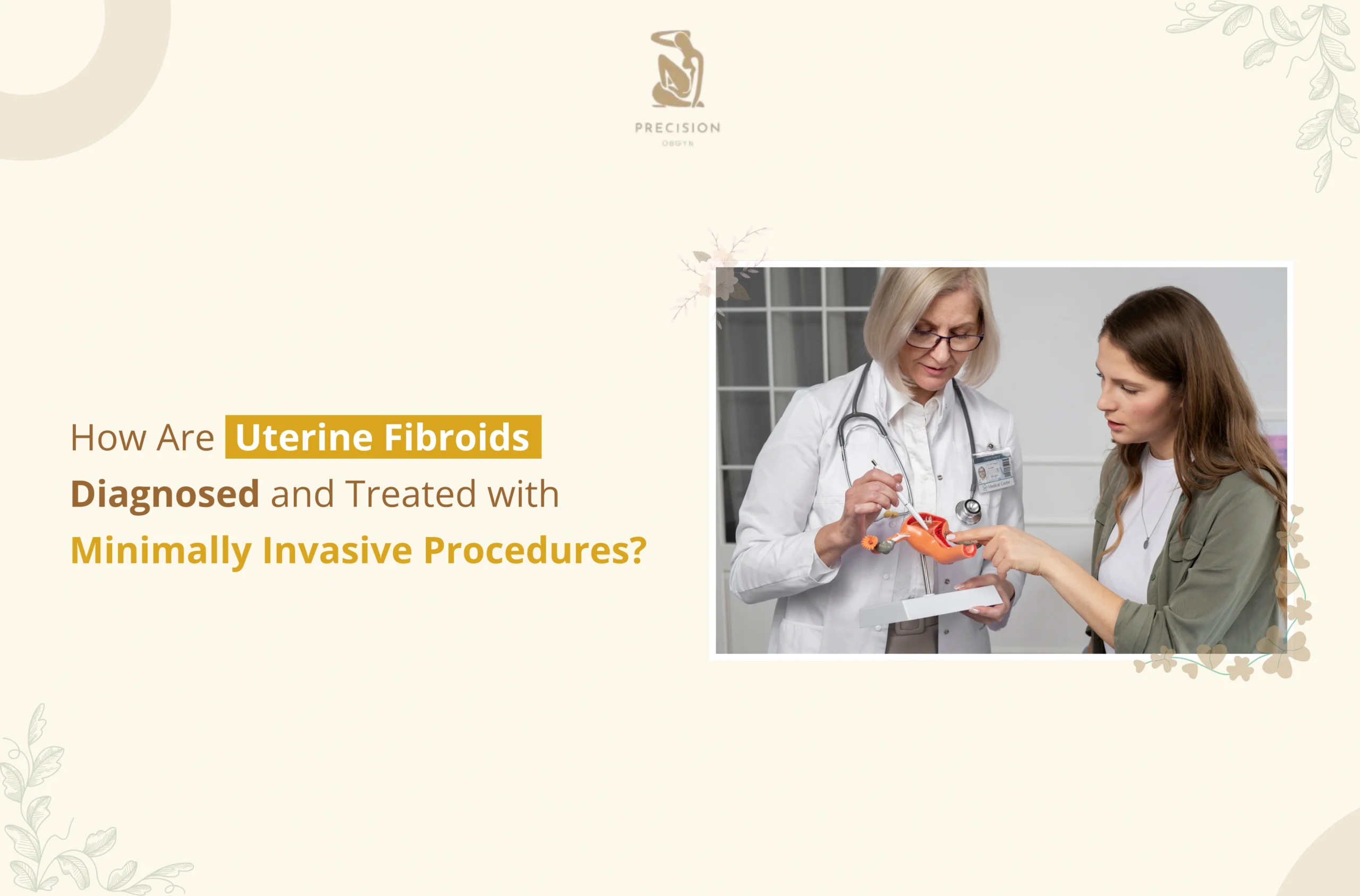
Heavy periods that soak through a pad in an hour. Pelvic pressure that never really goes away. Constant trips to the bathroom that don’t seem to have an obvious cause.
Plenty of women live with this for years before anyone ever mentions fibroids. And just as many women have fibroids and never find out, because nothing ever comes of them. Both of these are normal. The trick is figuring out which one applies to you.
Just How Common Fibroids Actually Are
Fibroids aren’t rare – they’re closer to the norm. Up to 70 percent of women will have them by menopause, and for Black women that number is even higher, over 80 percent.
Here’s the reassuring part: most of these never turn into anything worth worrying about. Only around 15 to 30 percent of women with fibroids end up needing treatment. So the real question isn’t “do I have fibroids” – it’s “are mine actually causing a problem.”
Why Diagnosis Relies on Imaging, Not Just an Exam
A pelvic exam can hint that something’s going on – a uterus that feels bigger or shaped oddly than expected. But that’s usually just the thing that sends you toward imaging, not the diagnosis itself. You need an actual picture to know how many fibroids there are, how big, and where.
Ultrasound is where most doctors start. It’s easy to access, there’s no radiation, and it usually tells you what you need to know.
MRI comes in for the trickier cases – when surgery is being planned in detail, or when the fibroid situation is more tangled than ultrasound can sort out on its own.
Sometimes a saline infusion sonogram or hysteroscopy gets added too, mainly to check whether a fibroid is pushing into the uterine cavity itself. That detail ends up mattering a lot, both for symptoms and for treatment.
What Symptoms Actually Tend to Show Up
Not everyone with fibroids notices a thing – a lot get spotted by accident during some unrelated scan. When symptoms do show up, they tend to fall into two camps.
The first is bleeding. Heavy periods, periods that drag on, spotting between cycles, sometimes bleeding heavy enough to cause anemia. One large international survey found women with diagnosed fibroids were nearly twice as likely to report heavy bleeding as women without.
The second is just bulk – the physical size and position of the fibroid pressing on things it shouldn’t. Pelvic pressure, low back pain, that constant sense of fullness.
Depending on where the fibroid sits, it can also lean on the bladder or bowel, which shows up as needing to pee constantly or dealing with constipation. Occasionally a large one causes real obstruction, though that’s the exception, not the rule.
Why Minimally Invasive Options Have Become the Standard
Hysterectomy used to be the go-to answer whenever fibroids caused real trouble. That’s not really true anymore. Doctors lean much harder now toward keeping the uterus intact and getting patients back on their feet faster, whenever that’s a realistic option.
What actually works best comes down to the individual – age, whether you still want kids, how many fibroids there are, how big, where they sit. There’s no one-size-fits-all answer here.
Uterine Fibroid Embolization
This is about as minimally invasive as it gets. An interventional radiologist threads a catheter in through the groin or wrist, guides it to the arteries feeding the fibroids, and releases tiny particles that cut off the blood supply. Starved of blood, the fibroids shrink.
No incision, just a small access point – usually no stitches needed. Recovery is quick compared to surgery, and around 90 percent of women report real pain relief afterward.
It’s a good fit for women who are done having kids, since the effect on fertility isn’t as well understood here as it is with the surgical options that spare the uterus.
Minimally Invasive Myomectomy
Myomectomy removes the fibroids but leaves the uterus in place, which is why it’s often preferred for women who still desire to have children. This can be done laparoscopically, robotically or hysteroscopically depending on where the fibroids are.
In contrast, laparoscopic and robotic approaches utilize small incisions and a camera, typically resulting in less pain, smaller scars and shorter recovery compared to open surgery. Full recovery, however (where you can no longer do heavy activity), tends to take around six weeks and most people are back to work in one or two weeks.
Hysteroscopic myomectomy is a bit different: it’s for fibroids sitting inside the uterine cavity, and it’s done entirely through the vagina and cervix, so there’s no external cut at all.
Pregnancy is possible after either version, which is a big reason this stays the top pick for women who aren’t finished building their family.
Radiofrequency Ablation
This one’s newer. It uses targeted energy, guided by ultrasound, to destroy the fibroid tissue in place rather than removing it.
The results have been strong – meaningful drops in heavy bleeding a year out, high satisfaction, and a return to work that’s often measured in days instead of weeks.
The other reason it has attracted notice is that it could help address a significant gap in care for Black women, who struggle with a higher load of fibroid disease and have long had less access to minimally invasive surgery.
Choosing the Right Path Forward
None of these is the “correct” answer across the board. Embolization works well for some, myomectomy for others, ablation for others still.
What actually decides it: fertility plans, how big and where the fibroids are, how bad the symptoms are, and honestly, personal preference matters too.
This is exactly why imaging has to come first. Without a real picture of what’s going on – the count, the size, the location – there’s no way to have a genuine conversation about which option fits, instead of just defaulting to whatever’s most familiar.
What This Looks Like at Precision Healthcare and Cosmetic Surgery
Getting a real answer starts with proper imaging and an actual conversation – about your symptoms, whether you want more kids, what matters most to you in how this gets treated. From there, most women today can avoid a full hysterectomy entirely, if that’s what they’d rather do.
If heavy periods or pelvic pressure have been part of your life for a while now, that’s worth getting looked at properly rather than just working around it indefinitely. Precision Healthcare and Cosmetic Surgery can help you figure out what’s actually happening and talk through which option makes sense for you. Reach out to schedule an appointment.