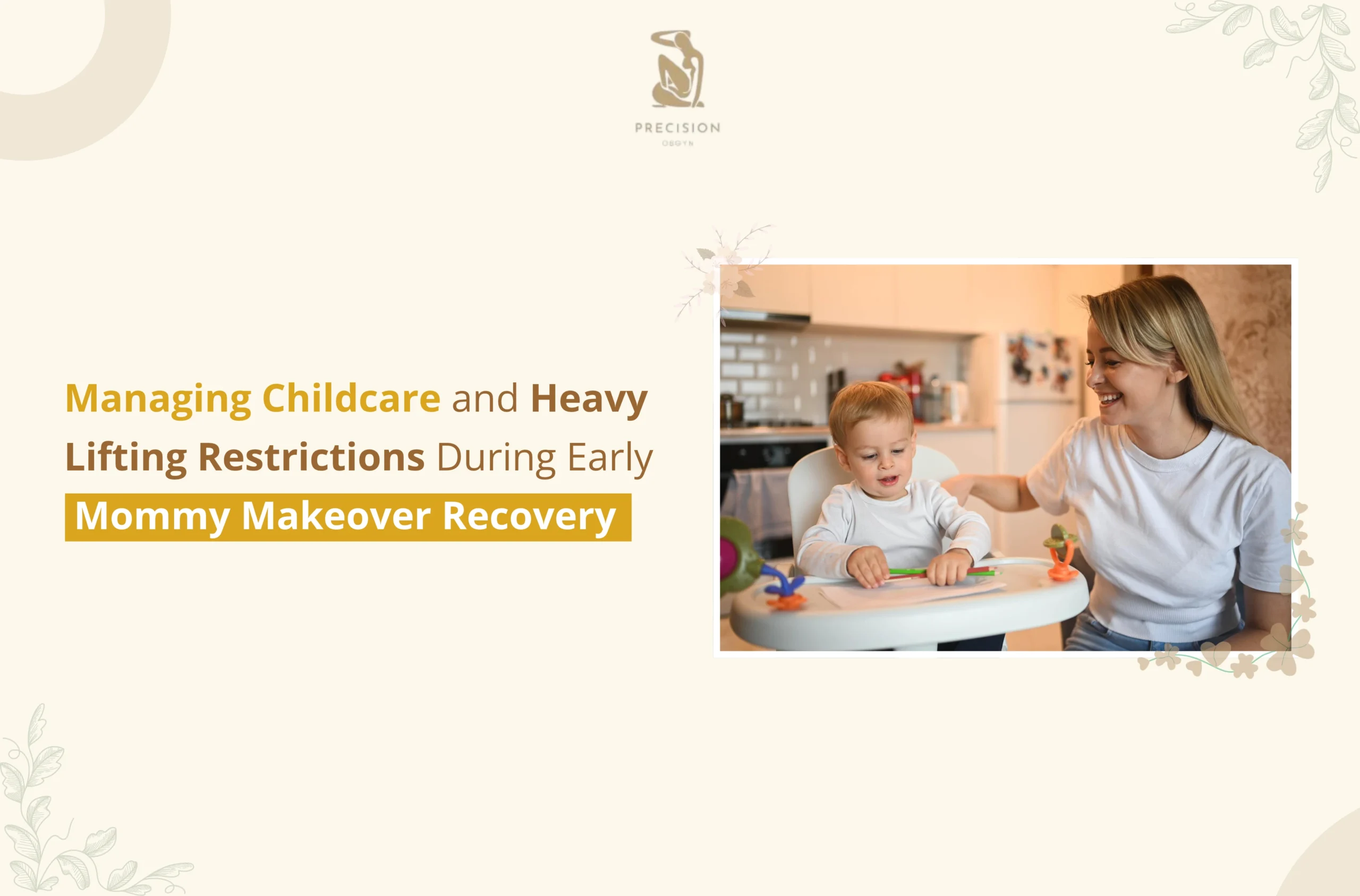
It is recommended that you do not lift or carry your children during the initial few weeks after surgery.
Although many surgeons have a 10 pound limit in place, the ultimate decision will be made by your surgeon. Therefore, having another person in the house to help with the children, avoiding lifting them when performing child-related tasks, and developing a plan for night-time care, bathing and school drop-offs and pick-ups are essential.
It’s 3 a.m. Your toddler is crying and holding up both arms.
You feel like picking them up, but your stomach hurts and you have a pain in the area where you had surgery. Your doctor told you to avoid lifting anything heavy.
There’s a lot of focus on the surgery side of a mommy makeover, but little attention paid to the aftermath. Specifically, the challenges of parenting children while recovering.
Here’s a practical guide to help you plan for it.
Why Can’t You Lift Your Kids After a Mommy Makeover?
The mommy makeover typically involves having both a breast surgery and some type of body contouring procedure such as a tummy tuck or liposuction performed simultaneously. Because your body needs to heal from two different surgeries at the same time, it can take longer to recover.
Lifting is risky early on for a few reasons:
- Your body will be healing. In many cases, a tummy tuck requires the tightening of the abdominal wall. Lifting large amounts of weight will place excessive stress on this part of your body.
- The incisions on your body have recently been made. Straining and pulling may cause damage to the stitches as well as to the tissue surrounding them.
- Swelling and bruising are at their peak. Extra effort can make both worse.
- The range of motion for your arms will be limited after you have breast surgery. If you reach or lift things, it could put stress on the incision sites where you are healing.
- Small drains may be used in some cases. When patients are able to return home after their procedure, they will often have small drains that can move around as the patient moves.
The American Society of Plastic Surgeons (ASPS) advises patients to refrain from lifting anything heavy, such as their children, and have an adult assist them in the beginning stages of recovery.
How Long Do Lifting Restrictions Last?
There isn’t a single amount that applies to all people. Your procedure, your body, and your doctor’s requirements will determine how much you need.
Here’s what published guidance gives us:
- Vanderbilt Health advises its tummy tuck patients to not lift, push, or pull anything weighing more than ten pounds for a minimum of two weeks following surgery, or longer if advised by their physician.
- According to ASPS, many women will be off the job for approximately two weeks and should be able to resume their daily routine within three months.
- Many programs use stricter limits for 4-6 weeks and then gradually increase the amount of weight used.
If you have undergone both a breast and abdomen procedure, please inquire about the limits that apply to each area of the procedure.
How Heavy Is “Too Heavy”? What Your Kids and Gear Actually Weigh
A 10-pound limit seems like a small amount. However, if you consider the items you typically lift during an average day, it appears even smaller.
Who Should Help, and What Should They Do?
You need a second adult. Not “someone on call.” Someone physically there.
At-Home Help Plan: ASPS suggests planning for help at home. For the first week or two (or longer depending upon how young your kids are), make arrangements for some form of at-home support.
Good helpers include:
- A partner who can take time off work
- A parent or in-law who can stay with you
- A trusted friend or neighbor for school runs
- A paid nanny, sitter, or postpartum helper
Spread the load across more than one person. One helper can burn out fast.
Give your helper a clear job list
- Lifting kids in and out of cribs, car seats, and high chairs
- Bath time
- Carrying laundry, groceries, and bags
- School drop-off and pick-up
- Overnight wake-ups
- Meal prep and cleanup
- Pet care, if your pets need lifting or walking
How Should You Prepare Your Home Before Surgery?
A bit of preparation can save you from a great deal of trouble in the future. Attempt to complete this one week prior to the day of your surgery.
- Move all your belongings to waist-level. Place your diapers, wipes, snacks, cups, and prescription medications within easy reach so that you can avoid bending down or reaching up for those items.
- Create a recovery area. Find a comfortable place to sit or lie down such as a chair or sofa, and place some pillows close by.
- Stock your kitchen. Make and freeze meals. Purchase snacks for your children to pick out on their own.
- Do the laundry. Wash the bedding and clothes ahead of time.
- Create a place to change your baby near your bed or couch so you don’t need to move the baby too much.
- Gather entertainment. Books, shows, and quiet toys will keep children occupied as you relax.
- Write down what each person is working on and when. Put this on a board or wall that everyone has access to.
- Pack a bag for your children. Include a change of clothing, some snacks, and some things that will make them feel comfortable.
How Can You Care for Your Kids Without Lifting Them?
Your kids still need you. You just need new ways to be there.
For babies and newborns
- Sit in a supported chair and have someone place the baby in your lap.
- While sitting in your chair, feed, rock and hold the baby. Get help from another person to give you the baby and take it away when finished.
- Keep the bassinet at bed height so you don’t have to bend.
- Let your helper handle all diaper changes, baths, and car seat moves.
- Ask your surgeon about safe feeding positions, especially after breast surgery.
For toddlers
- Sit down and let them climb up next to you. Don’t pick them up.
- Offer a step stool so they can get on the couch or into bed themselves.
- Read, color, and play on the floor level of a sofa or bed.
- Use calm words. “I can’t pick you up right now, but I can hold your hand.”
- Let your helper manage the high chair, car seat, and stroller.
For preschool and school-age kids
- Explain the rules in simple terms. “Mommy’s tummy is healing, so I can’t lift.”
- Give them small jobs, like bringing you a book or a cup.
- Plan quiet activities you can do together while seated.
- Make sure they know not to jump on you or tug on your arms.
What About Nights?
For most mothers, nights are the worst time. You are exhausted, you are in pain from all of the physical labor, and your child is waking up.
Here’s what helps:
- You can have your helper cover the wake-ups for at least the first week.
- Keep supplies in the room where your child sleeps.
- Use a bassinet or crib at a height that doesn’t make you bend.
- If you are using medication to help manage your pain, then please have another adult present with you when caring for a young child. Your drowsiness is real.
- Ask your surgeon before you try to nurse or hold a baby during the night.
Can You Drive Kids to School After a Mommy Makeover?
At first, no. Vanderbilt Health recommends that you wait until you are no longer taking prescribed pain medication and your doctor has given permission to drive.
Even after that, loading a car seat or stroller can still be an issue with regard to lifting restrictions. Prepare to have people drive you around for several weeks.
Ask your surgeon when you can:
- Drive without pain or hesitation
- Buckle a seat belt comfortably
- Turn your body to check blind spots
- Load or unload a stroller or car seat
What About Walking and Blood Clots?
Rest matters. So does movement.
Your doctor may recommend that you walk for small periods of time, but gently. Walking increases blood circulation and decreases the likelihood of developing blood clots in your legs.
Learn about the warning signs. Vanderbilt Health identifies the following as reasons for calling your surgeon:
- A fever of 100.4°F (38°C) or higher
- Pain, swelling, redness, or warmth in a leg, calf, or thigh
- Signs of infection, like more redness, warmth, or foul-smelling drainage
- Pain that your medicine isn’t controlling
Call 911 for chest pain or trouble breathing.
How Do You Know If You’re Doing Too Much?
Your body will tell you. Pay attention to these signs:
- Pulling or sharp pain in your abdomen
- New or growing swelling
- Fluid or blood on your dressings
- More bruising than before
- Dizziness or feeling faint
- A sudden jump in pain
If you see any of the symptoms listed above, please stop your activities and take a break. Contact your surgeon if the problem continues.
Is It Normal to Feel Guilty or Frustrated?
Yes. Many moms do.
You might dislike watching another person put your child to bed. You may believe that you are failing your children.
A few things can help:
- Remind yourself that healing is part of caring for your family.
- Pick one small thing you can do each day, like reading a story.
- Tell your kids the plan in advance, so it feels less sudden.
- Talk to a friend or your care team if it starts to weigh on you.
This phase is short. Your kids will be back in your arms before you know it.
How Soon After Having a Baby Can You Have a Mommy Makeover?
These differences will affect how a person can plan for their surgery. The timing of the surgery depends on the surgeon. The ASPS states that it may take as long as six months for a woman’s body to return to pre-pregnancy status. Therefore, many surgeons would prefer to wait until a woman’s body has returned to a more stable state (i.e., weight and muscle mass have reached a point where they are not changing significantly) before performing surgery.
Here’s what ASPS articles share:
- Six months is what many doctors recommend for a woman to wait before having surgery after giving birth. There are also some who feel that one year may be better.
- For breast procedures, a woman’s breastfeeding should be discontinued. According to one ASPS article, a woman should discontinue her use of breastfeeding no less than six months prior to surgery. In addition to this, another article stated that a surgeon recommended that a woman discontinue her use of breastfeeding no less than six weeks prior to surgery, with the preference being three months.
- Being at a stable goal weight for about six months helps results last.
- Many surgeons suggest finishing having children first, though it isn’t a rule.
- Let your doctor know if you’ve had a C-section so that he or she knows what to look for when examining and treating your abdominal area.
How Can Precision Healthcare and Cosmetic Surgery Help?
Precision Healthcare & Cosmetic Surgery is here to assist moms who want to create a realistic mommy makeover plan based on their daily routine, such as their children, work/school schedules and the types of people they can depend on for assistance.
At our practice, you have the option of having a breast augmentation, breast lift, tummy tuck or liposuction. When we meet for a consultation, we will discuss with you:
- What your recovery will look like
- Which lifting limits apply to you
- How much help you’ll need at home
- How to time your surgery around your family
You can meet the surgeon before your procedure. If you are interested in how much it will cost, view our financing options.
- Locations: Miami and Aventura, FL
- Phone: (305) 424-8622
- Hours: Monday to Friday, 9 a.m. to 8 p.m.
When you are ready to start planning your Mommy Makeover, schedule a consultation with us, or give us a call at (305) 424-8622.
Frequently Asked Questions
How long will I be unable to lift my child after a mommy makeover?
It is different. Most surgeons will require that you limit your lifting for at least the first several weeks, and possibly up to 4 to 6 weeks (or more) after surgery. Ultimately, your surgeon will determine when it is safe to begin lifting again.
Can I lift my baby at all in the first week?
Usually no. Please ask your surgeon about sitting with a baby in your lap, as it may be viewed differently than picking up a child.
What’s the weight limit after a tummy tuck?
A general rule of thumb is approximately 10 pounds for a minimum of two weeks according to Vanderbilt Health’s patient education material. However, some physicians may impose more stringent restrictions and/or longer time periods.
How long do I need help at home?
Women usually prepare for some level of assistance for a minimum of one to two full weeks. Depending on whether you have a baby or a young child, your preparation time could be longer.
Can I pick up my toddler after two weeks?
The answer is most likely no, not quite yet.
We would recommend asking about the timing of the procedure during your next scheduled appointment.
Can I carry a car seat after surgery?
Not this early. Your infant’s car seat, with the baby in it, will weigh 20-30 lbs. Get help carrying the car seat from someone else, until you are cleared by your surgeon.
The Bottom Line
Mommy Makeover Recovery is primarily concerned with preparation. Surgery will be completed in a matter of days. However, the first several weeks post-surgery will require a great deal of help.
Have someone assist; prepare your house for when you return home; understand what you can physically lift prior to going to the hospital. Your body will recover much faster, and your children will notice a positive change.
Take the first step: Set up an appointment for a consultation at Precision Healthcare & Cosmetic Surgery.
This article is for general knowledge purposes only. It is not considered medical advice. Recovery and lift restrictions vary by individual, therefore please follow your surgeon’s recommendations. For individuals experiencing chest pain or difficulty breathing, please contact 911 immediately.
Sources
The American Society of Plastic Surgeons provides a guide for what you can expect during the recovery period following your Mommy Makeover procedure.