Irregular periods can be confusing and sometimes concerning.
Many women notice changes in their cycles throughout life, but irregular cycle changes or a spot between them can show that a problem exists. Uterine fibroids are one of the common causes.
Knowing how fibroids affect menstrual cycles helps women spot fibroid disease symptoms early and get the right care.
At Precision OBGYN, we offer personalized, caring services. We help women find solutions and comfort when menstrual health is uncertain.
Below, we’ll explain whether fibroids cause irregular periods and spotting and treatment options that can help restore normal cycles.
What Are Fibroids?
Fibroids or uterine fibroids, are non-cancerous growths. They form from the increase of cells in or near the uterus. They consist of muscle and fibrous tissue and can be either so tiny and non-symptomatic or so huge as to cause deformity to the shape of the uterus.
Research shows that up to 70–80% of women may develop fibroids during their reproductive years.
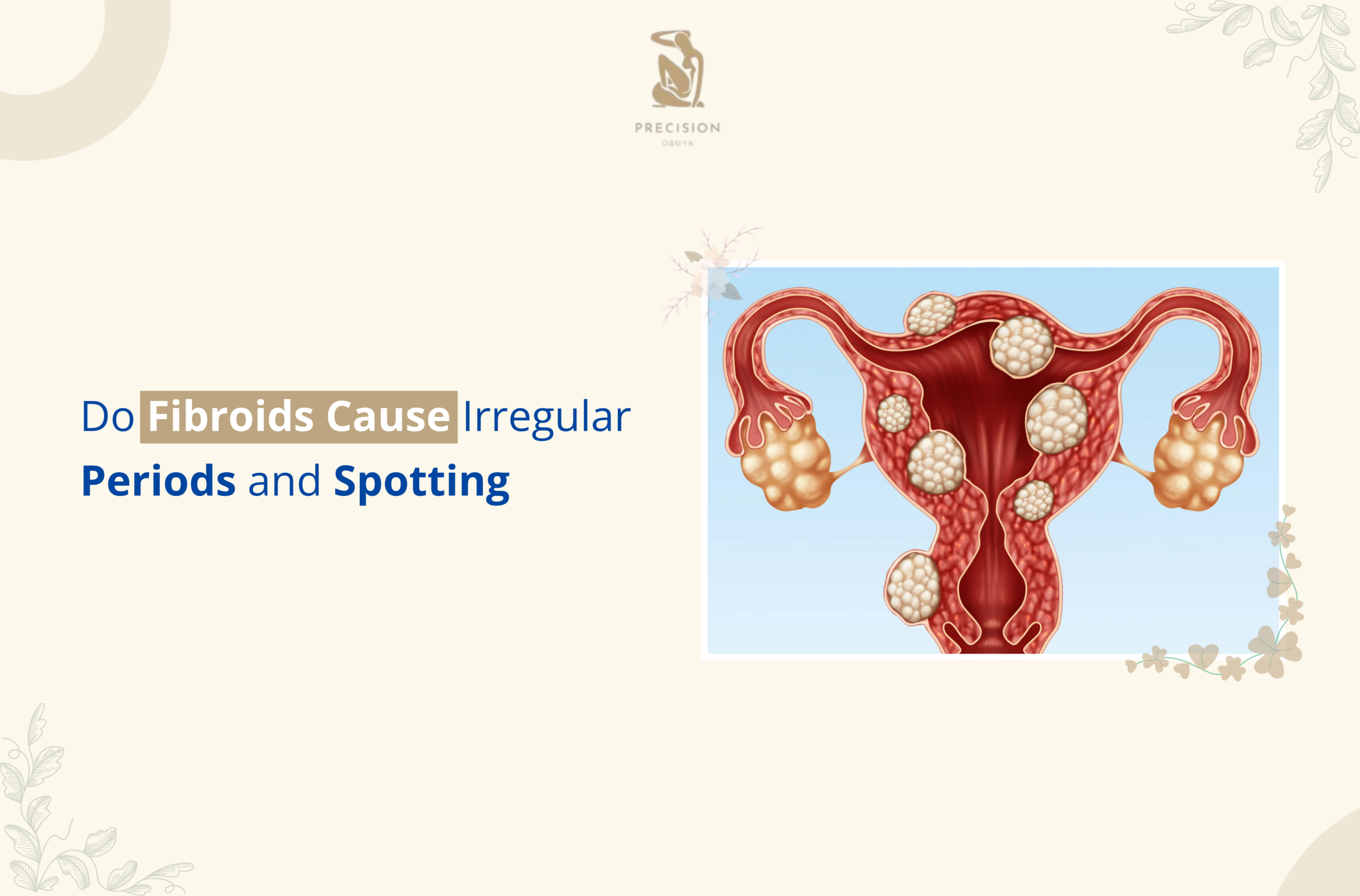
Fibroids are categorized into various kinds according to their position:
- Intramural fibroids grow in the uterine wall
- Submucosal fibroids protrude into the uterine cavity
- Subserosal tumors grow on the exterior layer of the uterus
- Pedunculate fibroids, fastened to the uterus by a support
Each type may influence menstrual cycles.
The Office on Women’s Health states that millions of women have fibroids and not all of them have symptoms that may be observed.
Do Fibroids Cause Irregular Periods?
Yes, fibroids can cause irregular periods. The uterus plays a central role in the menstrual cycle and fibroids can interfere with its normal function.
When fibroids grow inside or near the uterine lining, they may disrupt the way the uterus sheds its lining during menstruation.
A common concern for many patients is, “Can fibroids cause bleeding that is heavier or more frequent than usual?” The answer is yes. This interference can lead to:
- Periods that arrive earlier or later than usual
- Heavier or prolonged bleeding
- Irregular bleeding between cycles
Submucosal fibroids are particularly associated with menstrual irregularities due to their position in the uterine cavity. Even intramural fibroids can alter blood flow and hormone responses, affecting cycle timing.
At Precision OBGYN, women experiencing heavy or irregular periods receive individualized care tailored to their needs.
Can Fibroids Cause Spotting Between Periods?
Yes, fibroids can cause spotting. Spotting is light bleeding that occurs outside the regular menstrual cycle. This may appear as:
- Light brown or light pink discharge
- Minimal blood stains on underclothing or bathroom tissue
- Bleeding after intercourse
Spotting happens due to:
- Uterine irritability
- Alterations in the blood vessels surrounding the fibroid
- The endometrium (uterine lining) pressure
- Hormonal factors connected with the development of fibroids
Submucosal fibroids frequently lead to spotting as they directly impact the uterine lining.
Pregnant Women with Fibroids
Most pregnancies are normal. However, women with fibroids may have extra challenges. The complications are related to the size and location of fibroids and could include:
- Fibroid degeneration pain
- Higher chances of miscarriage
- Preterm labor
- Placental complications
Discomfort can also be experienced when fibroids enlarge the uterus. Many women who have fibroids deliver healthy babies after receiving regular prenatal care.
Most Common Fibroids Signs and Symptoms
Although fibroids can be asymptomatic, they tend to impair menstrual and pelvic health when the symptoms manifest themselves.
The typical fibroid disease symptoms are:
- Heavy periods from fibroids
- Pelvic pressure or pain
- Frequent urination
- Pain during sex
- Lower back discomfort
- Fullness or bloating in the abdomen
Fibroids can even result in fertility obstacles in certain instances. Nonetheless, a good number of women who possess fibroids do not show any symptoms.
Can Fibroids Go Away on Their Own?
The fibroids do not usually fade away on their own, but in some cases, they may reduce under some conditions, which include:
- During menopause, when estrogen levels drop
- During hormonal therapy
- When the fibroid’s blood supply decreases
However, many fibroids are stable or are constantly growing and it is necessary to monitor them and have regular medical check-ups.
When Irregular Bleeding Should Be Evaluated
Sometimes a change in the cycles may happen because of stress or hormonal changes. However, continued abnormal bleeding should be considered. Make an appointment if you have:
- Frequent bleeding between periods
- Periods lasting longer than 7–8 days
- Heavy bleeding, soaking pads or tampons quickly
- Severe pelvic pain during menstruation
- Bleeding after intercourse
While fibroids are a common cause, other conditions must be ruled out.
Precision OBGYN specializes in the treatment of fibroids. We handle both diagnosis and treatment planning.
Diagnosing Fibroids
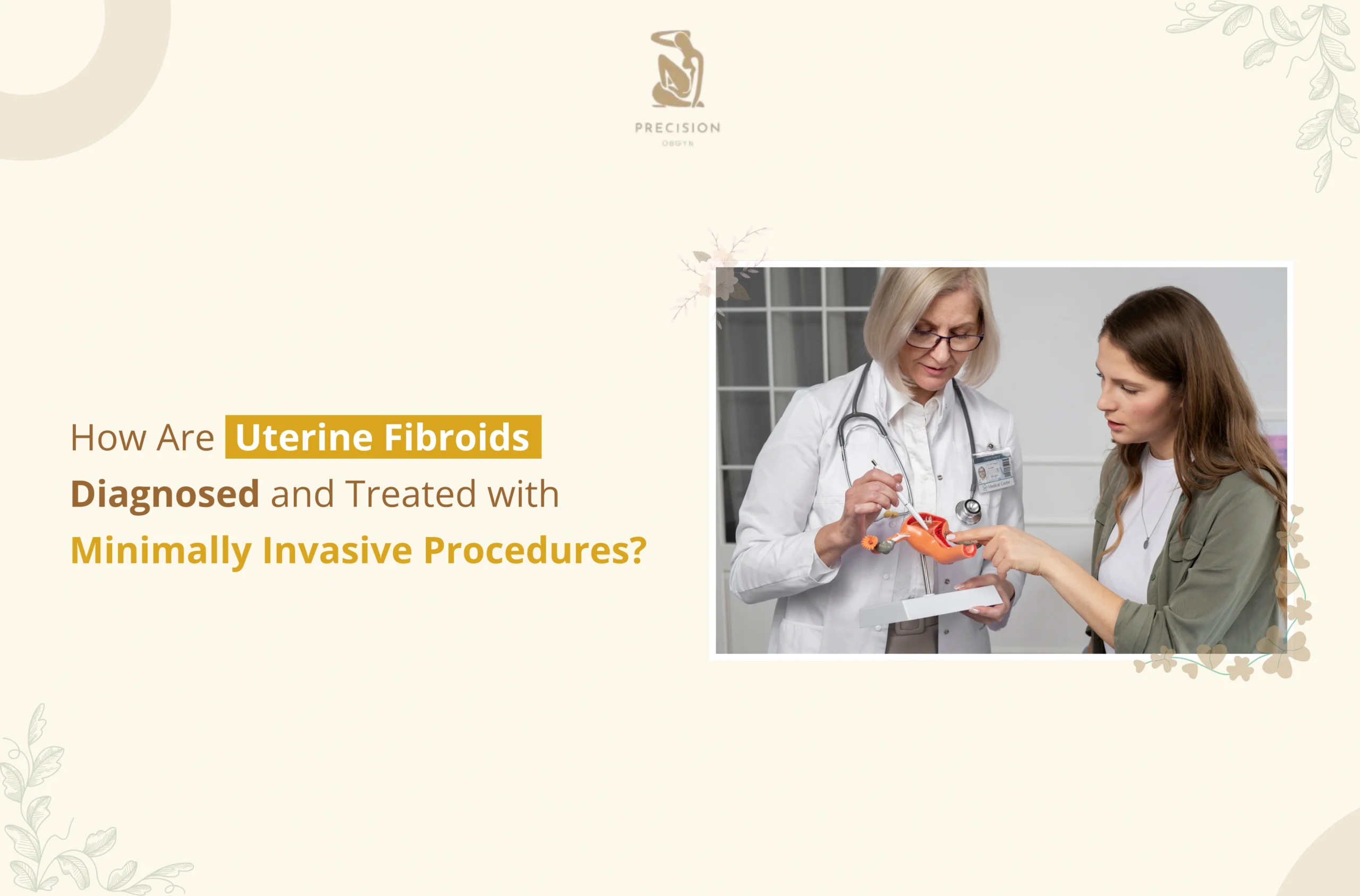
If fibroids are suspected, Precision OBGYN provider may recommend a few simple tests.
- Pelvic examination can determine any swelling or uterine abnormalities
- An ultrasound helps identify the size, number and location of fibroids
- An MRI gives in-depth images that aid in treatment planning
- A hysteroscopy is the examination of the inside of the uterus with a small camera
These tests are minimally invasive and offer excellent information to be managed successfully.
Treatment Options for Fibroid-Related Irregular Bleeding
Treatment is based on several factors:
- Fibroid size and location
- Severity of symptoms
- Age and reproductive plans
- Overall health
Our provider can specify one or more of the following at Precision OBGYN.
Medication
Some drugs are used to treat symptoms.
These may include:
- Hormonal birth control
- Progesterone therapy
- Hormone regulating medications
Medication does not guarantee a permanent reduction in the size of fibroids but it may help manage bleeding.
Minimally Invasive Procedures
For persistent symptoms, less invasive therapies can be prescribed.
These include:
- Uterine fibroid embolization
- Focused ultrasound MRI-guided
- Hysteroscopic fibroid hysterectomy
These therapies are used to minimize the symptoms and retain the uterus.
Surgical Options
Surgery can be the best intervention in certain instances.
Common procedures include:
- Myomectomy, the extraction of fibroids while maintaining the uterus
- Hysterectomy, the removal of the womb frequently seen as a solution when other methods fall short
A specialist can help you choose the best option.
Lifestyle Tips That May Help Manage Fibroid Disease Symptoms
Although lifestyle change is not the cure for fibroids, it can also promote the overall reproductive health:
- Maintain a balanced diet
- Manage stress
- Exercise regularly
- Track menstrual cycles
- Attend routine gynecologic exams
Tracking the cycles can be used to detect patterns that can be associated with bleeding caused by fibroids.
Get Expert Fibroid Care at Precision OBGYN
Irregular periods and spotting may be annoying, confusing and even troubling. When it is the fibroids that are interfering with your menstrual cycle, then proper treatment can go a long way.
Experts at Precision OBGYN specialize in caring for patients in a compassionate and patient-centered setting and providing sophisticated treatment to address the problems of uterine fibroids and abnormal bleeding.
If you’re experiencing fibroid disease symptoms, it may be time to speak with a specialist.
Schedule a consultation with the team at Precision OBGYN team and have a detailed analysis and an individual approach to treatment.
FAQs
What does a fibroid feel like?
Women feel pelvic fullness or pressure. Large fibroids cause abdominal swelling.
Can fibroids cause back pain?
Yes, large fibroids press on nerves and cause lower back discomfort.