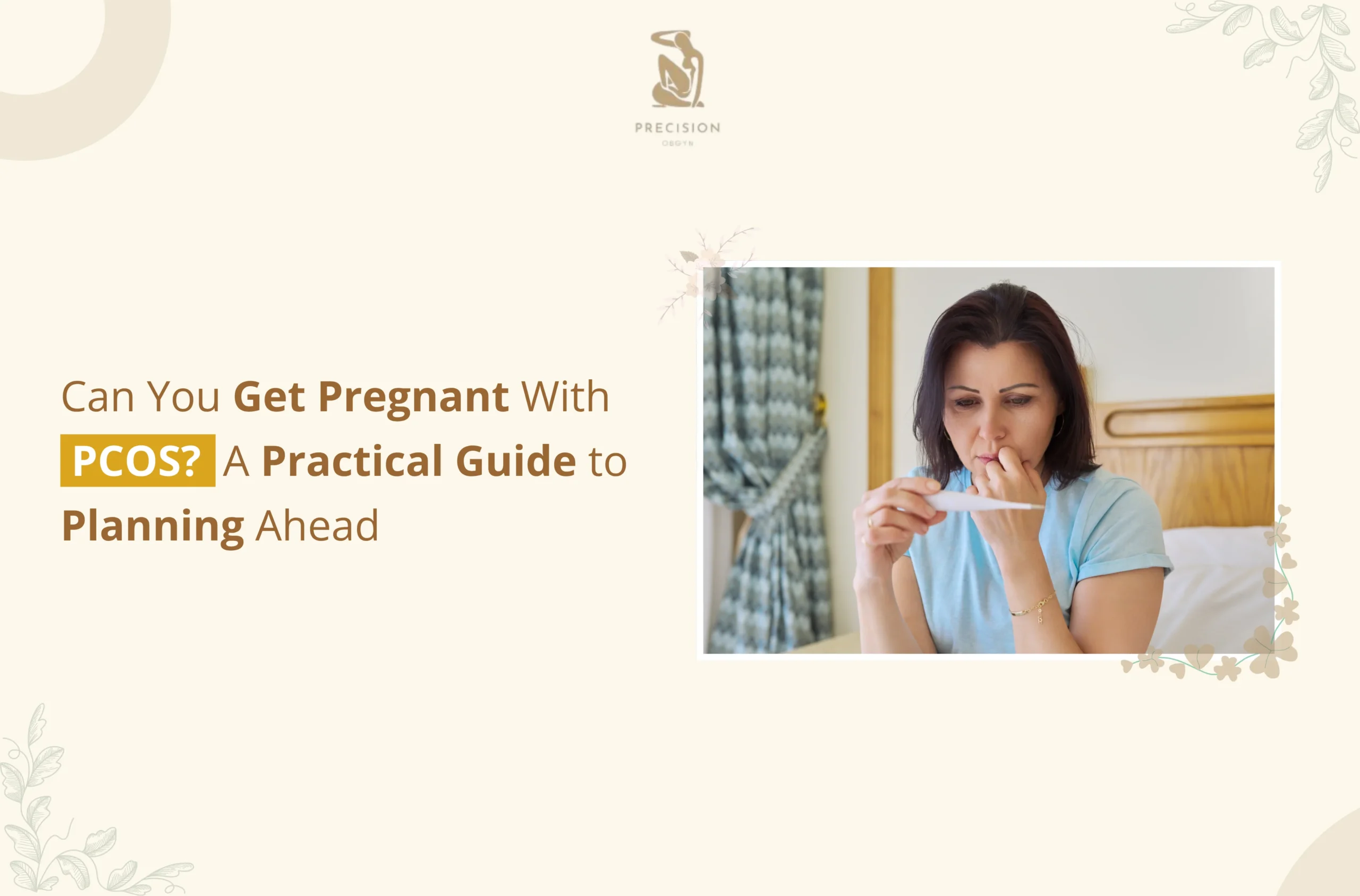
A period that shows up whenever it wants. Acne that hangs around well past your twenties. Hair growing where you didn’t ask for it, thinning where you’d rather it stayed. Then the diagnosis finally lands: PCOS. And it’s both a relief and a lot to carry at once.
Getting a name for what you’re experiencing feels like vindication after years of “it’s just stress” and “you’ll grow out of it.” It also leaves you with more questions than your quarter-hour appointment allows for.
So here’s the real version. What’s going on in your body and what actually helps, whether you’re trying to get pregnant right now or just trying to feel normal in your own skin again.
What PCOS Actually Is
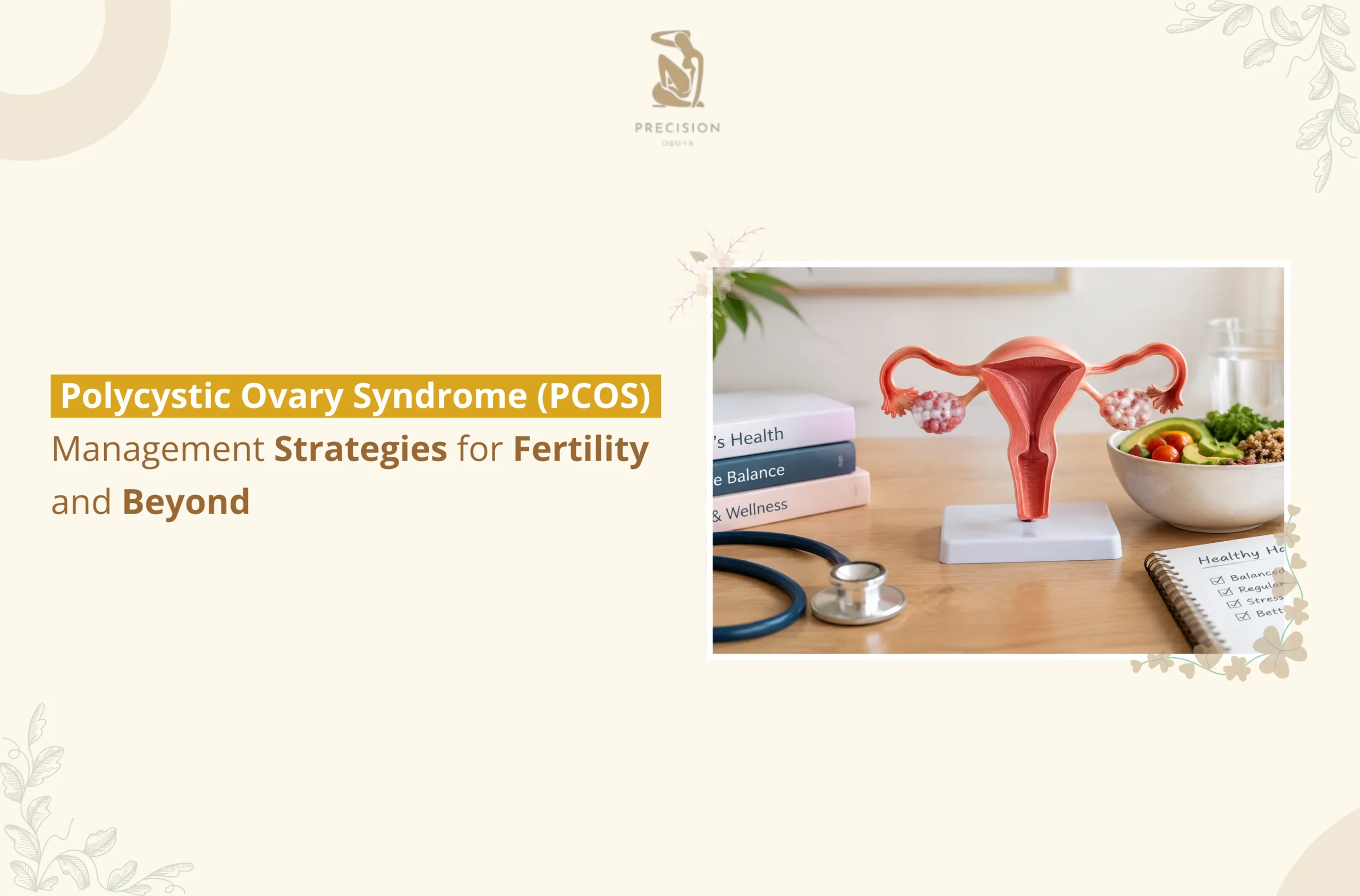
Doctors diagnose it when two out of three things are happening:
- Irregular or missing ovulation
- Signs of excess androgens like acne, extra hair growth or ovaries that look polycystic on ultrasound
Two out of three, not all three. Which is part of why your PCOS and your friend’s PCOS can look nothing alike.
A lot of it traces back to insulin resistance. Your cells stop responding to insulin properly, so your body cranks out more of it.
That extra insulin pushes your ovaries toward producing more androgens, and that’s what throws ovulation off and drives a lot of what you’re actually dealing with. Not the full story for everyone, but it’s the engine behind most of it.
If Fertility Is the Part That Hurts
Trying to conceive with PCOS and watching it not happen, month after month, is its own kind of exhausting. Nobody needs to push through that quietly like it’s not a big deal.
Most people with PCOS do get pregnant, usually with some combination of the following.
- Lifestyle changes come first. Even a modest amount of weight loss, when weight’s part of the picture, can bring ovulation back and improve the odds. Not about hitting some number. Small, sustainable shifts tend to matter more than anything drastic.
- Letrozole is often tried first now. It’s shown to work better than the older standard treatment, both for triggering ovulation and for actual live births.
- Clomiphene citrate is still widely used and FDA-approved specifically for this. Works indirectly, nudging an egg toward maturing and releasing.
- Metformin improves how your body handles insulin. Sometimes on its own, sometimes paired with something else. Helps ovulation along, though it doesn’t always move pregnancy rates by itself.
- Gonadotropins are injectable hormones that trigger ovulation directly. More effective, but they raise your odds of multiples.
- IVF, when everything else hasn’t worked, tends to offer the best shot.
None of it is one-size-fits-all, and none of it means you did something wrong. What works depends on your hormones, how your body’s responded so far, what else is going on. A good provider walks through this with you instead of handing you a prescription and sending you off.
PCOS Doesn’t Go Away When You’re Not Trying to Conceive
This part gets skipped over a lot, and it shouldn’t be. PCOS isn’t just a fertility thing. It sticks around whether or not kids are part of the plan. Before pregnancy, after it, or if pregnancy was never the goal.
- Two to three times the risk of prediabetes and type 2 diabetes
- Higher rates of high blood pressure and unhealthy cholesterol
- At least double the risk of endometrial cancer, tied to irregular periods and the hormone imbalance behind them
- Close to four times more likely to deal with sleep apnea, often undiagnosed for years
- Higher rates of depression and anxiety, which tracks completely. Unpredictable symptoms, body changes you didn’t choose, a diagnosis that touches your skin, your weight, your mood, your fertility all at once. That wears on a person. It’s not “just hormones.”
Which is exactly why this isn’t something to manage for nine months and then forget about. It’s a long game.
What Actually Helps
- Move regularly, in whatever form you’ll actually keep doing. Exercise improves insulin sensitivity directly, and that’s the root issue behind a lot of this.
- Build meals around protein and fiber. Both slow down blood sugar spikes, which means less insulin surging, which means fewer androgens getting triggered.
- Get checked for sleep apnea if you’re tired no matter how much you sleep. More common with PCOS than people realize, and very treatable once caught.
- Take the mental health side seriously. This isn’t weakness, it’s just what happens when you’re managing a chronic hormonal condition. It deserves real support.
- Track your cycle, irregular as it is. Gives your provider something to actually work with.
A Few Things Worth Hearing Plainly
You didn’t cause this. It’s not about eating wrong or not trying hard enough. Plenty of people manage their diet carefully and still deal with real symptoms.
Struggling to conceive doesn’t mean your body is broken. It means it needs some support getting there, and that support works for most people.
Managing PCOS still matters even when pregnancy isn’t the goal right now – the long-term risks don’t pause just because fertility isn’t on your mind this year.
Being frustrated by all of this is fair. Years of being dismissed or told to just lose weight takes something out of a person. Finding a provider who actually listens changes a lot.
When to Loop In a Specialist
Worth a real conversation with an OB-GYN if:
- Your periods are consistently irregular or missing
- Acne, hair growth, or hair thinning is new or getting worse
- You’ve been trying to conceive for several months without luck
- Fatigue, mood changes, or sleep issues don’t add up
- You got a PCOS diagnosis years ago and haven’t revisited it since
PCOS shifts over time. What worked five years ago might not be what your body needs now.
You Deserve a Plan That Actually Fits You
PCOS is a unique condition for each person who has it, and it warrants more than a pamphlet and some “lose weight” as you leave the office. Whether fertility’s what’s on your mind right now or you’re thinking longer-term, Precision Health and Cosmetic Surgery can create a plan based on what you and your body genuinely require.