Choosing a permanent birth control method is a deeply personal decision. If you’re thinking about tubal ligation, or “getting your tubes tied,” look at more than the medical facts.Also, think about your future. Consider your lifestyle and emotional readiness, too. At Precision OBGYN, we want to help you decide. We mix medical facts with personal support. Let’s explore everything you need to know to determine if tubal ligation is the right choice for you.
First, What Is Tubal Ligation?
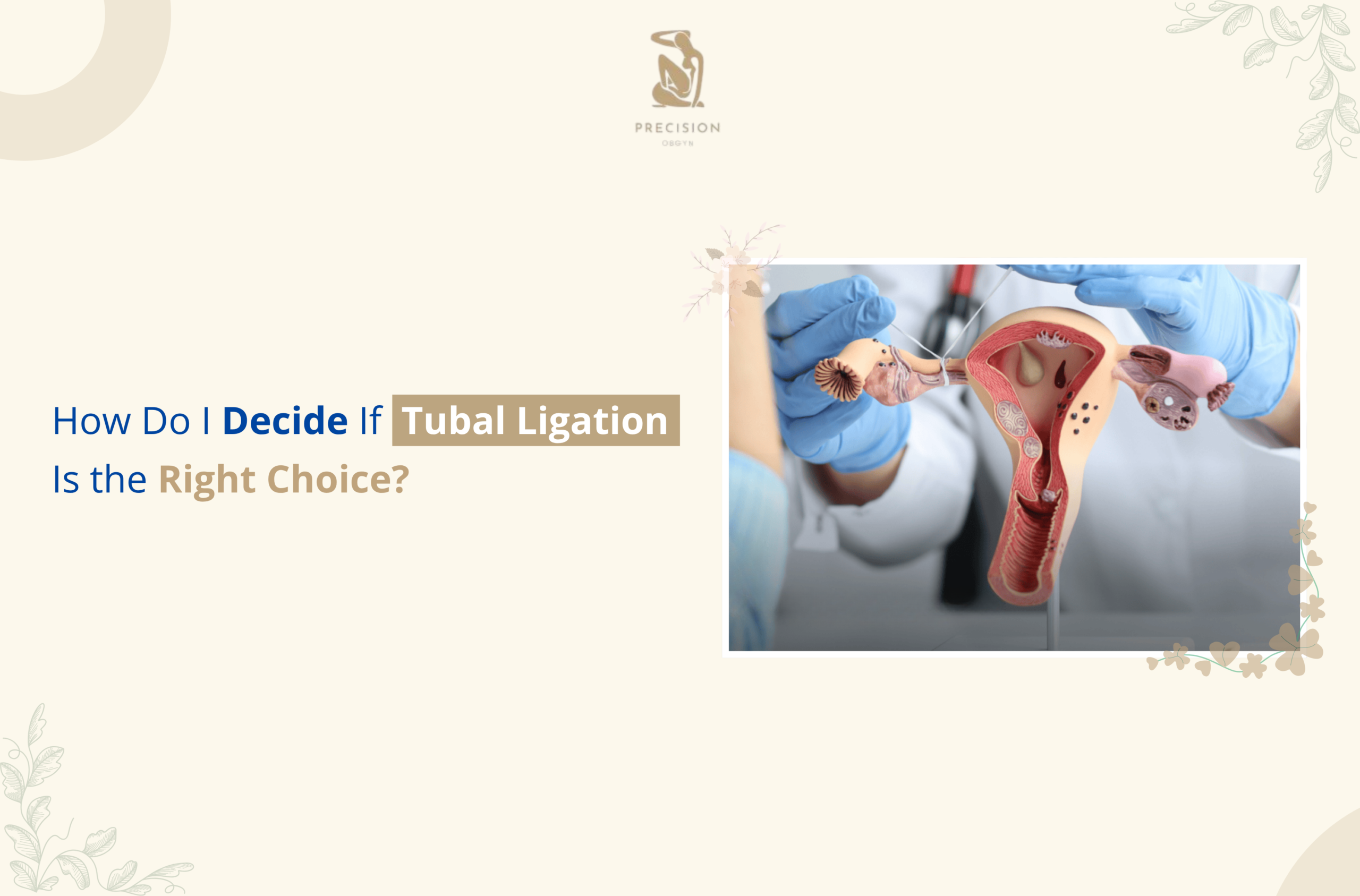
Tubal ligation is a surgery that stops pregnancy. It works by blocking or sealing the fallopian tubes. This blocks the egg from reaching sperm, preventing fertilization from occurring. It’s considered:
- Highly effective
- Permanent
- Hormone-free
Women choose it to avoid daily pills, injections, or devices.
The Most Important Question: Are You Done Having Children?
Tubal ligation is meant to be permanent. So, the biggest factor isn’t medical, it’s personal. Ask yourself honestly:
- Am I entirely sure that I do not want more children?
- Am I going to regret the fact that my life situation may have changed?
- Am I choosing this for myself or due to external pressure?
It can be a change in life, relationships, finances, health or even personal wishes. Uncertainty may be reduced by using long-term, reversible devices such as IUDs or implants.
Your Health Matters Too
While tubal ligation is generally safe, it may not be ideal for everyone. Your doctor will consider factors like:
- Previous abdominal surgeries
- Heart conditions
- Obesity
- Bleeding disorders
- Immune system conditions
These factors might not rule out the procedure, but they can affect how it’s done. Sharing your full medical history with a qualified gynecologist ensures a safe approach. At Precision OBGYN, our team reviews all risks and checks if tubal ligation is right for your health.
Understanding the Procedure Options
There isn’t just one way to perform tubal ligation.
- Laparoscopic Procedure
A low-impact procedure with minor openings and speedier recuperation.
- Mini-Laparotomy
Often done after childbirth with a slightly larger incision.
- Hysteroscopic Method
A non-incisional procedure where small implants block the fallopian tubes. It is less common but avoids abdominal surgery. Your lifestyle, recovery preference and medical history help determine the best method.
How Effective is Tubal Ligation?
This is a very successful procedure, with a failure rate of tubal ligation of less than 1%. Though very unlikely, pregnancy might take place, and in this case, it might be an ectopic pregnancy that will need emergency treatment.
Do You Still Have a Period After Tubes Tied?
This is one of the most common concerns. Tubal ligation does not affect your hormones or ovaries.
So:
- Your period after tubal ligation will continue
- Your menopause timing won’t change
Any cycle differences afterward are usually related to age or natural hormonal shifts not the procedure itself.
Possible Side Effects of Tubal Ligation
Like any surgery, there are some short-term risks:
- Mild cramping or abdominal discomfort
- Fatigue
- Small scars
- Rare risk of infection or bleeding
Serious side effects from tubes tied are uncommon but understanding them helps you make a confident decision.
The Emotional Side of the Decision
Many women feel:
- Relief from pregnancy worries
- Freedom from ongoing contraception
- But sometimes, unexpected doubt
Even when you’re confident, adjusting to permanent fertility change can feel emotional. That’s normal. This is not only a physical decision but also a psychological decision. At Precision OBGYN, our team provides counseling and support. We help women tackle emotional concerns so they can feel confident and informed about their choices.
A Simple Self-Check
Tubal ligation may be proper for you if:
- You’re sure you don’t want more children
- You want a permanent solution
- You prefer non-hormonal birth control
- You’re comfortable with surgery
You may want to reconsider if:
- You feel unsure about the future
- You’re deciding on pressure
- You want flexibility later
Questions Worth Asking Your Doctor
Before deciding, consider discussing:
- Is this the safest option for my health?
- What are my alternatives?
- What does recovery look like?
- What is the failure rate of tubal ligation?
- How might I feel emotionally afterward?
- What side effects of ligation should I expect?
Conclusion
Deciding on tubal ligation takes time and careful thought. Talk to trusted professionals and ask questions to make an informed decision. Precision OBGYN can help. Contact us to discuss the procedure and get support. Call (305) 424-8622 or fill out the form for more information.
FAQs
Will the surgery hurt?
The process will have you asleep. Pain or exhaustion after surgery is normal for several days.
Can I change my mind later?
Tubal ligation should be permanent. It is possible, though not guaranteed, that reversal can occur.