
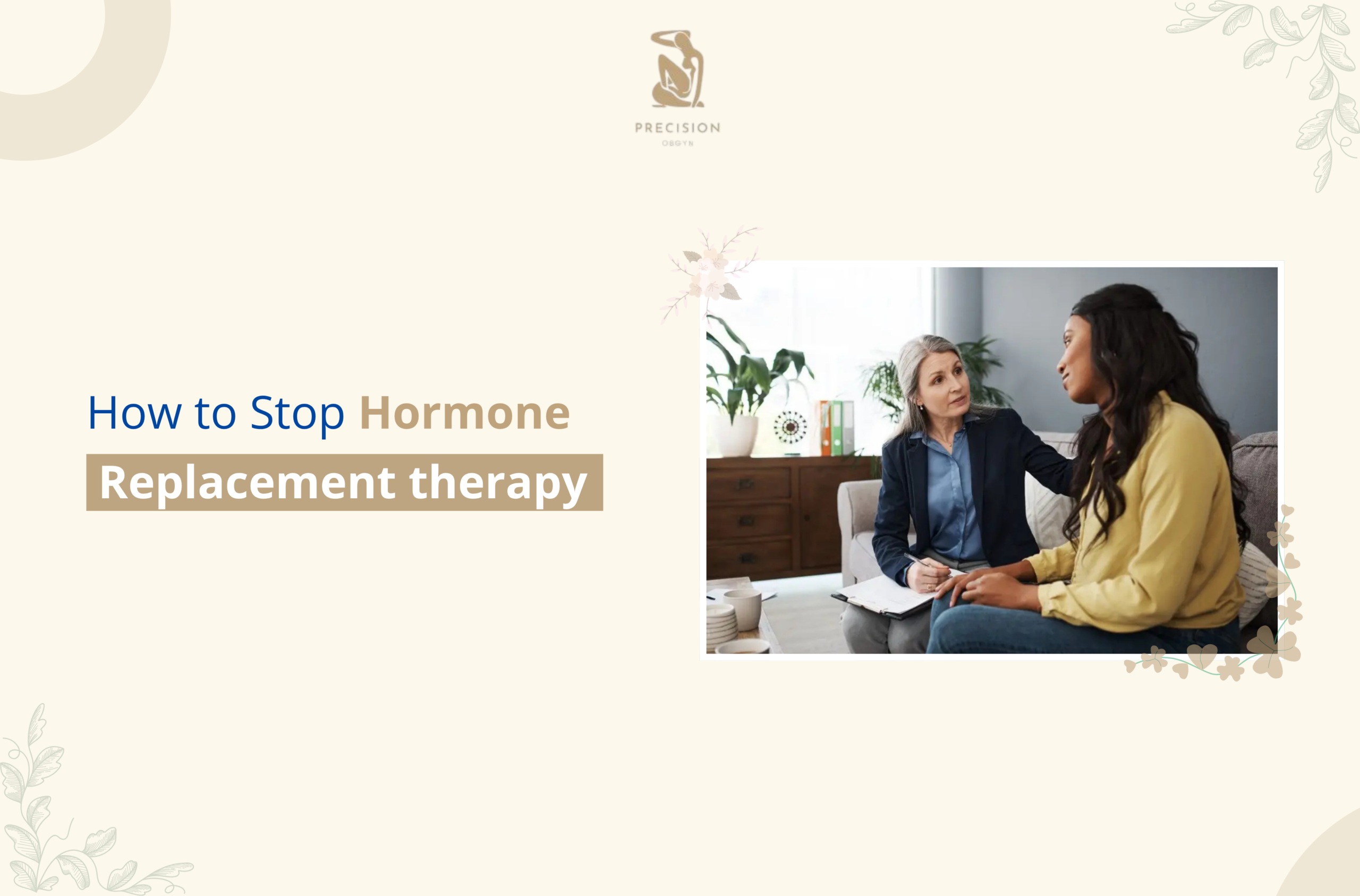
At Precision OBGYN, we know that hormone replacement therapy, or HRT, can help. It makes many women feel better during menopause. It can alleviate night sweats, hot flashes, sleep disturbances, and mood swings. Many patients ask how to know if you need HRT when they first start feeling these changes. But some women conclude that it is time to quit. Such a decision can be enormous and even frightening.
The positive aspect is that a good plan may allow several women to quit HRT without any issues. What is good to one person is not necessarily good to another. It depends on your age, your health, your symptoms and the duration of your taking HRT. This is the reason why a discussion with a reliable gynecologic specialist is essential.
Why Some Women Stop HRT
There are many reasons a woman may want to stop hormone therapy.
- Her symptoms have gotten much better
- She wants to try life without hormones
- She has side effects like bloating, breast tenderness, or headaches and wonders how long do HRT side effects last.
- Her health needs have changed
- Her doctor wants to review whether she still needs it
Some women stop because they are worried about long term use. Others just want to see how they feel without it. Both reasons are okay. What matters most is making a safe plan.
Do Not Stop Without a Plan
Some women stop HRT all at once. Others lower the dose slowly. The right choice depends on the person. If you are going off HRT, stopping suddenly may bring back menopause symptoms fast. It can also make the body feel out of balance for a short time.
A safer plan often includes:
- Talking with your doctor first
- Looking at your current dose
- Deciding if you should lower it slowly
- Watching for symptoms after each change
- Checking in again after a few weeks
At Precision OBGYN, we help women think through these steps calmly and clearly.
What You May Feel After Stopping
When hormones go down, some symptoms can return. Not every woman gets them and some feel only mild changes. Others notice more, such as the return of HRT for menopause anxiety or restlessness.
Common symptoms can include:
- Hot flashes
- Night sweats
- Trouble sleeping
- Mood swings
- Vaginal dryness
- Low energy
- Headaches
- Body aches
These symptoms do not always mean something is wrong. They may just mean your body is adjusting. Still, if symptoms are strong or last too long, you should let your doctor know.
A Slow Step-Down May Help
For many women, tapering is easier than stopping all at once. Tapering means using less medicine over time. This gives the body a chance to adjust in a gentler way.
A doctor may suggest:
- Taking a lower dose
- Using HRT on fewer days
- Changing the type of hormone treatment
- Checking how you feel before making the next change
Not every woman needs the same plan. A woman who has used HRT for a short time may need a different plan than someone who has used it for years. Your provider will help you choose what fits best.
Helpful Tips as You Stop HRT
You can support your body while it adjusts. Small daily habits can provide extra help with hormones and make a real difference.
Try these simple steps:
- Keep your bedroom cool at night
- Wear light layers
- Drink water often
- Avoid too much caffeine
- Exercise in a way that feels good
- Eat balanced meals
- Try deep breathing when stress rises
It can also help to write down your symptoms. A simple note each day can show patterns. You may notice that hot flashes happen after coffee, stress, or a poor night of sleep. That kind of information is useful at your follow up visit.
When to Call Your Doctor
Some changes are normal, but some signs need medical care. Call your doctor if you have:
- Very heavy bleeding
- Strong mood changes
- Chest pain
- Shortness of breath
- Severe headaches
- Symptoms that keep getting worse
- Trouble doing daily tasks
You should also call if you are unsure whether your symptoms are from stopping HRT or from something else. It is always better to check.
How Precision OBGYN Can Help
At Precision OBGYN, we offer individualized care for women throughout all stages of life. Whether you are in menopause now or getting ready to stop HRT, we help you feel informed and supported.
We may talk with you about:
- Your hormone replacement therapy plan
- Your menopause symptoms
- Your sleep, mood and comfort
- Your overall women’s health
- Other care you may need, like a well woman exam
We also offer services that can support your health during this stage of life, including menopausal consultation, breast cancer screening, fibroid management, STI’s test, HPV vaccination, birth control and contraception consultation, menstrual consultation and Aveli. Our goal is to help you make smart choices that match your body and your life.
A Simple Plan for Stopping HRT
If you are thinking about stopping, this simple plan for how to come off HRT can help:
- Make an appointment with your gynecologist
- Share your reasons for wanting to stop
- Ask if tapering is best for you
- Learn what symptoms may return
- Set a follow up visit
- Keep track of how you feel
This kind of care makes the process easier and safer. You don’t need to navigate it by guessing.
Final Thoughts
Stopping hormone replacement therapy is a matter of choice. There are those women who quit because they are prepared. Others cease due to changes in health requirements. The correct answer does not exist.
What matters is how you do it. A smart strategy can cut stress and give you more control. You can navigate through this change in a secure and gradual manner with the appropriate support.
We are Precision OBGYN, and we are here to help you with professionalism and understanding. We can offer you the next step with confidence in case you are considering quitting HRT.
FAQs
-
Can I start HRT again if I need it?
Yes, some women do. Talk to your doctor before starting again.
-
Will I have trouble sleeping?
Some women do. Try a calm bedtime and a cool room to help sleep.
-
How long does HRT take to work if I restart?
It varies, but many women begin to feel relief from symptoms within a few weeks of starting the treatment again.