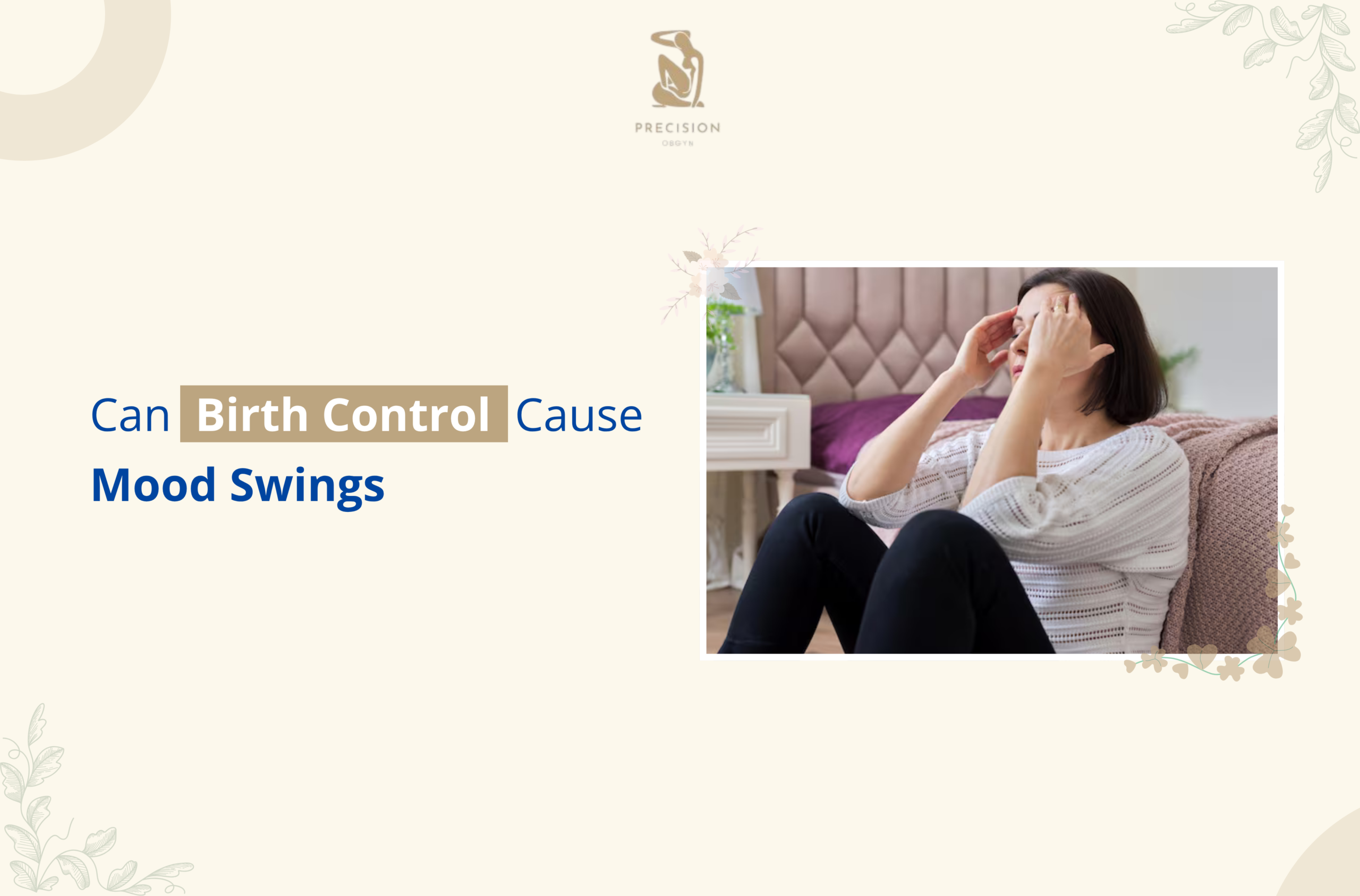
Contraceptives can make numerous individuals feel like they are more in control of their lives and health. However, there are also some individuals who observe mood changes after they have initiated them. They can feel sad, angry, or anxious, which is disorienting. It is a common question: can birth control make you emotional?
We understand that women are all different at Precision OBGYN. Some people do very well with birth control, but others may need an alternative. We are aimed at providing personal care and advice in order to make your decisions about what is right for your body and your life.
What Are Mood Swings?
Mood swings imply that you have your moods changing quickly. One moment you may be okay and the next upset. Such changes may either be minor or intense, resulting in many different moods throughout the day.
The mood swings can appear as:
- Being happy and then sad
- Easily becoming annoyed
- Crying more than usual
- Being nervous or anxious
- Exhausted and out of character
Birth control does not cause all mood changes. It can also be caused by stress, a lack of sleep, monthly hormonal variations and life events, which are all well-known causes of mood swings in females.
How Birth Control Can Affect Mood
There are hormonal methods of birth control. Hormones are natural body chemicals. They help control many things. One important function is your menstrual cycle. As the levels of hormones fluctuate, so can your mood.
Some individuals may be sensitive to birth control as it can influence their mood due to:
- The body is adjusting to increased hormone levels
- The hormones can influence brain chemicals associated with emotions
- Certain individuals are more attuned to hormonal fluctuations
- The method might not suit a particular individual
In other women, the changes in mood are mild and disappear quickly. In other cases, the changes can be more protracted and difficult to handle.
Signs Birth Control May Be Affecting Your Mood
You may want to notice how you feel after starting or changing birth control. Pay attention to changes that seem new or stronger than before.
Common signs may include:
- Feeling more emotional than usual
- More sadness or crying
- Anger or short temper
- Anxiety or nervous feelings
- Low energy
- Trouble focusing
- Less interest in things you usually enjoy
Keeping track of your feelings can help you and your doctor see a pattern.
Not Everyone Has the Same Reaction
Birth control does not affect every woman the same way. One person may feel great about a method, while another may not. It is rarely just a matter of having a moody personality, rather, it is about your unique biology.
A few things can change how your body reacts:
- Your hormone balance
- Your age
- Your stress level
- Your sleep
- Your mental health history
- The type of birth control you use
That is why personal care matters so much. At Precision OBGYN, we focus on your needs, not a one-size-fits-all answer
Types of Birth Control and Mood Changes
Different methods can affect people in different ways. When choosing a method, you may have questions about how long birth control lasts and how they interact with your cycle. Some methods have hormones and some do not.
Hormonal methods may include:
- Birth control pills
- The patch
- The shot
- The implant
- Hormonal IUDs
Non-hormonal methods may include:
- Copper IUDs
- Condoms
- Other barrier methods
Some women feel mood changes with hormonal birth control. Others do not. A non-hormonal option may be a better choice for some people.
When Mood Swings May Be Normal
A short adjustment period can happen when you start a new birth control method. Your body might require some time to adapt to it.
Mood swings may be more likely when:
- You just started a new method
- You switched from one method to another
- Your body is still adjusting
- You are under a lot of stress
Small changes for a short time may not mean the method is wrong for you. Still, you should speak up if the feelings are strong or do not improve.
When to Talk to Your Doctor
You should talk to your doctor if mood changes are making daily life hard. You do not have to wait until things feel very bad.
Call your doctor if you notice:
- Mood swings that last for weeks
- Sadness that does not go away
- Strong anxiety
- Anger that feels hard to control
- Trouble sleeping because of your feelings
- A drop in your daily routine or work
- Thoughts of hurting yourself
These signs deserve care right away. Your health and peace of mind matter.
What Your Doctor May Do
If you think birth control is affecting your mood, your doctor can help you look at your options. You may not need to stop birth control right away. Sometimes a small change makes a big difference.
Your doctor may:
- Ask when the mood changes started
- Review your current birth control method
- Discuss how to take the pill properly to maintain steady hormone levels
- Talk about your stress, sleep and health
- Suggest a different pill or method
- Recommend a non-hormonal choice
- Check for other possible causes
The right choice should support both your health and your comfort.
How Precision OBGYN Can Help
At Precision OBGYN, we offer personalized birth control and contraception consultations to help women make informed choices. We listen with care and help you understand your options in a simple way.
We can help with:
- Birth control/contraception consultation
- Well woman exam
- Menstrual consultation
- Hormone replacement therapy
- Menopausal consultation
- STI’s test
- HPV vaccination
- Fibroid management
- Breast cancer screening
- Aveli
Whether you are not yet ready to get pregnant, interested in pregnancy later, done with reproduction, or entering menopause, we are here to support you.
Questions To Ask at Your Visit
A visit with your doctor is a good time to ask clear questions. You may want to ask:
- Could my birth control be causing mood swings?
- Is there a better method for me?
- Should I try a non-hormonal option?
- How long should I wait before changing methods?
- What should I watch for next?
Asking questions can help you feel calmer and more confident.
Simple Ways to Support Your Mood
While you talk with your doctor, a few healthy habits may help support your mood.
Try to:
- Sleep at a regular time
- Drink enough water
- Eat regular meals
- Move your body each day
- Rest when you feel tired
- Write down mood changes
- Share your feelings with someone you trust
These steps may not fix the problem, but they can help you feel steadier.
Final Thoughts
Yes, some people may have mood swings from birth control. Yet this will not be the case with everyone. When you start on birth control and your mood changes, it does not imply that something is amiss with you. It can just be that your body demands an alternative.
The positive is that there is assistance. At Precision OBGYN, we offer personalized care. Our goal is to educate and empower you.
If your birth control is affecting your mood, talk to your doctor. The right program helps protect your health. You will feel more like yourself again
FAQs
-
Should I call my doctor about mood changes?
Yes. Talk to your doctor if the mood swings feel strong or do not go away.
-
Can a different birth control help?
Yes. A different method may work better for your body and your mood.