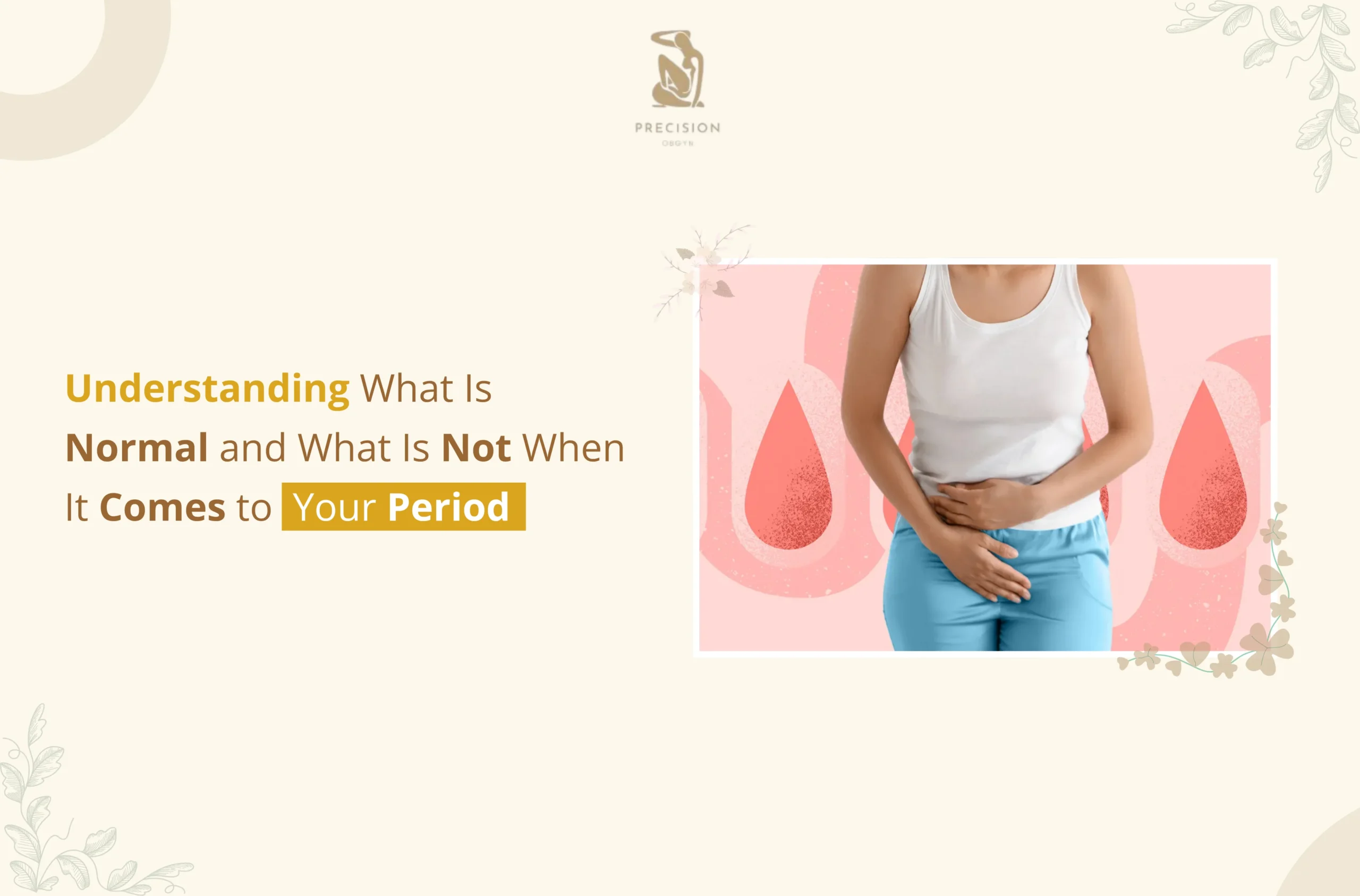
A normal period typically occurs every 21-35 days, for 3-7 days, and involves cramps that can be controlled.
It’s worth getting checked if you soak a pad or tampon every hour or two, bleed longer than 7 days, pass clots bigger than a quarter or have pain that keeps you from your day.
If you ask a bunch of friends about what a normal period is, you’ll get twelve different answers. The duration of mine is 5 days. Mine is two, then a week of spotting. Mine used to be fine and now it’s not.
Nobody hands you a rulebook, so most of us compare notes and guess. That’s how people end up living with heavy, painful, or unpredictable periods for years.
This post gives you the actual numbers, the warning signs and a plain idea of what to do about them.
What Does a Normal Period Look Like?
Every body has its own rhythm, but there’s a healthy range. Here’s a quick guide for adults.
| Category | Typical Range | Worth a Call If |
| Cycle length | About 21 to 35 days, counted from the first day of one period to the first day of the next | Shorter than 21 or longer than 35 days, or it changes suddenly |
| Length of bleeding | About 3 to 7 days | Longer than 7 days |
| How much you bleed | Roughly 30 to 80 mL in total, which is hard to measure | Soaking a pad or tampon every 1 to 2 hours |
| Clots | Small ones now and then | Bigger than a quarter |
| Missed periods | Pregnancy, breastfeeding, or certain birth control | No period for 90 days when you’re not pregnant |
Some medical references allow cycles up to about 38 days. And it’s normal for your cycle to vary by a few days from month to month.
What Should the Flow and Color Look Like?
A period doesn’t run at one speed. It usually starts light, gets heavier for a day or two, then tapers off.
Color changes too, and most of it is harmless:
- Bright red: Common on heavier days.
- Dark red or brown: Often older blood at the start or end of your period.
- Pink or watery: Can happen when your flow is light.
Gray or greenish discharge, especially with a strong smell, isn’t typical. Mention it to your provider.
Are Cramps and Mood Swings Normal?
Some are. Mild to moderate cramps, bloating, tender breasts, and a bit of moodiness are common in the days around a period.
The line is how much it takes over your life. These are not things you just have to accept:
- Pain that sends you home from work or school
- Cramps that painkillers don’t touch
- Severe mood changes before your period, like deep sadness, anxiety, or rage that clears up once bleeding starts. This can be PMDD, a more serious form of PMS.
- Pain that’s new, or getting worse over time
What’s Normal for Teens?
In the first year or two after a first period, things are often unpredictable. That’s expected.
For teens, a typical cycle can run from 21 to 45 days, and periods usually last 3 to 8 days. Still, it’s worth seeing a doctor if:
- Periods start before age 9
- There’s no period by age 15, or within two years of breast development starting
- Bleeding soaks through products every 1 to 2 hours
- Bleeding lasts more than 7 days
- Pain or symptoms interfere with school
- Periods stop after being regular
What Changes in Your 40s?
Perimenopause can start years before your final period. Your cycles may get shorter, longer, heavier, lighter, or skip a month entirely.
Some of that is normal. But it’s still smart to get checked if you have very heavy bleeding, spotting between periods, or bleeding after sex. Those can have other causes, and they shouldn’t be blamed on “just hormones” without a look.
What Are the Warning Signs That a Period Isn’t Normal?
Pay attention to changes more than any single number. A pattern that’s different for you counts.
Call your provider if you notice:
- Soaking through a pad or tampon every hour or two for several hours
- Needing two pads at once, or changing products overnight
- Periods longer than 7 days
- Clots bigger than a quarter
- Cycles shorter than 21 or longer than 35 days
- No period for 90 days (and you’re not pregnant)
- Bleeding between periods, or after sex
- A regular cycle that suddenly turns irregular
- Severe pain that’s new or getting worse
- Tiredness, dizziness, or shortness of breath, which can be signs of low iron from heavy bleeding
What Causes Period Problems?
A lot of things, and often more than one. Common causes include:
- PCOS: Can cause irregular or missed periods
- Fibroids and polyps: Can cause heavy or long periods
- Endometriosis: Often causes painful periods
- Thyroid problems: Can make periods heavier, lighter, or irregular
- Bleeding disorders: More common than people think in those with very heavy periods
- Medications and birth control: Some change or stop periods
- Stress, big weight changes, and intense exercise
- Perimenopause: Shifting hormones in the 40s
In about half of women with heavy periods, no clear cause turns up. That doesn’t mean it can’t be treated.
How Can You Track Your Period?
A few cycles of notes can tell your provider more than a long explanation. A phone app works fine, and so does a paper calendar.
Write down:
- The first and last day of each period
- How heavy it is, such as how many pads or tampons you use per day
- Clots, and roughly how big
- Pain, on a scale of 1 to 10
- Spotting between periods
- Mood, sleep, and anything unusual
Bring two or three months of notes to your visit.
What Will the Doctor Do?
It starts with a conversation, then tests only if you need them. Depending on your history, your provider may suggest:
- A pregnancy test: Often the first step
- Blood work: To check for anemia, thyroid problems, or a bleeding disorder
- An ultrasound: To look for fibroids, polyps, or cysts
- Other tests, like a biopsy, in certain cases
How Are Period Problems Treated?
It depends on the cause and what you want. Options can include:
- Over-the-counter pain medicine, started at the first sign of your period
- Hormonal birth control, including pills and hormonal IUDs
- Medicines that reduce heavy bleeding
- Treating the cause, such as thyroid disease or PCOS
- Procedures for fibroids or polyps, when needed
You don’t have to jump to surgery. Most people start with simpler options.
When Is It an Emergency?
Get urgent care if you have:
- Bleeding that soaks through a pad or tampon every hour for several hours
- Dizziness, fainting, or a racing heartbeat with heavy bleeding
- Sudden, severe pelvic pain
- Fever, vomiting, or feeling seriously ill, especially while using a tampon, which can be a sign of toxic shock syndrome
- Heavy bleeding if you’re pregnant or might be
In an emergency, call 911.
How Can Precision Ob-Gyn FL Help?
If something about your period doesn’t feel right, we’re happy to talk it through. We offer menstrual consultations and gynecologic care in Miami and Aventura – including help with heavy, painful and irregular periods, PCOS, endometriosis, and fibroids – as well as birth control options and menopause care.
- Miami – 330 SW 27th Ave, Suite 609, Miami, FL 33135
- Aventura – 2820 NE 214th St, 8th Floor, Aventura, FL 33180
- Hours – Monday to Friday, 9 AM to 8 PM
- Phone – (305) 424-8622
Ready for real answers? Book an appointment or call (305) 424-8622. You can also read more on our blog.
FAQ
How long should a normal period last?
Most last 3 to 7 days. Bleeding longer than 7 days is worth a call to your provider.
What is a normal cycle length?
About 21 to 35 days for adults, counting from the first day of one period to the first day of the next. Teens can run longer, up to about 45 days.
Is it normal to skip a period?
Once in a while, yes. Stress, travel, illness, and weight changes can all do it. If you miss 90 days and you’re not pregnant, get checked.
What size clots are normal?
Small clots now and then are common. Clots bigger than a quarter are worth mentioning to your provider.
How many pads or tampons is too many?
If you soak through one every hour or two for several hours, or need to change overnight, that’s heavy bleeding and deserves a visit.
Can stress change my period?
Yes. Stress, big weight changes, and intense exercise can delay or change a period. If changes keep happening, there may be another cause.
Do I need to worry about spotting between periods?
Sometimes it’s minor, but it’s worth mentioning, especially if it happens often or after sex.
Can a doctor fix painful periods?
In many cases, yes. Treatment depends on the cause, from pain medicine and hormonal options to treating conditions like endometriosis.
The Bottom Line
You know your body better than any chart does. If your period has changed, hurts more than it should, or leaves you worn out, that’s reason enough to ask.
Take the next step: Book a visit with Precision Health and Cosmetic Surgery.
This article is for education only. It isn’t medical advice, diagnosis, or treatment.
Sources
- Merck Manual Professional Version. Normal Menstrual Parameters
- American Family Physician (AAFP). Abnormal Uterine Bleeding
- SickKids AboutKidsHealth. What Is a Menstrual Period?
- ca. Is My Bleeding Normal?