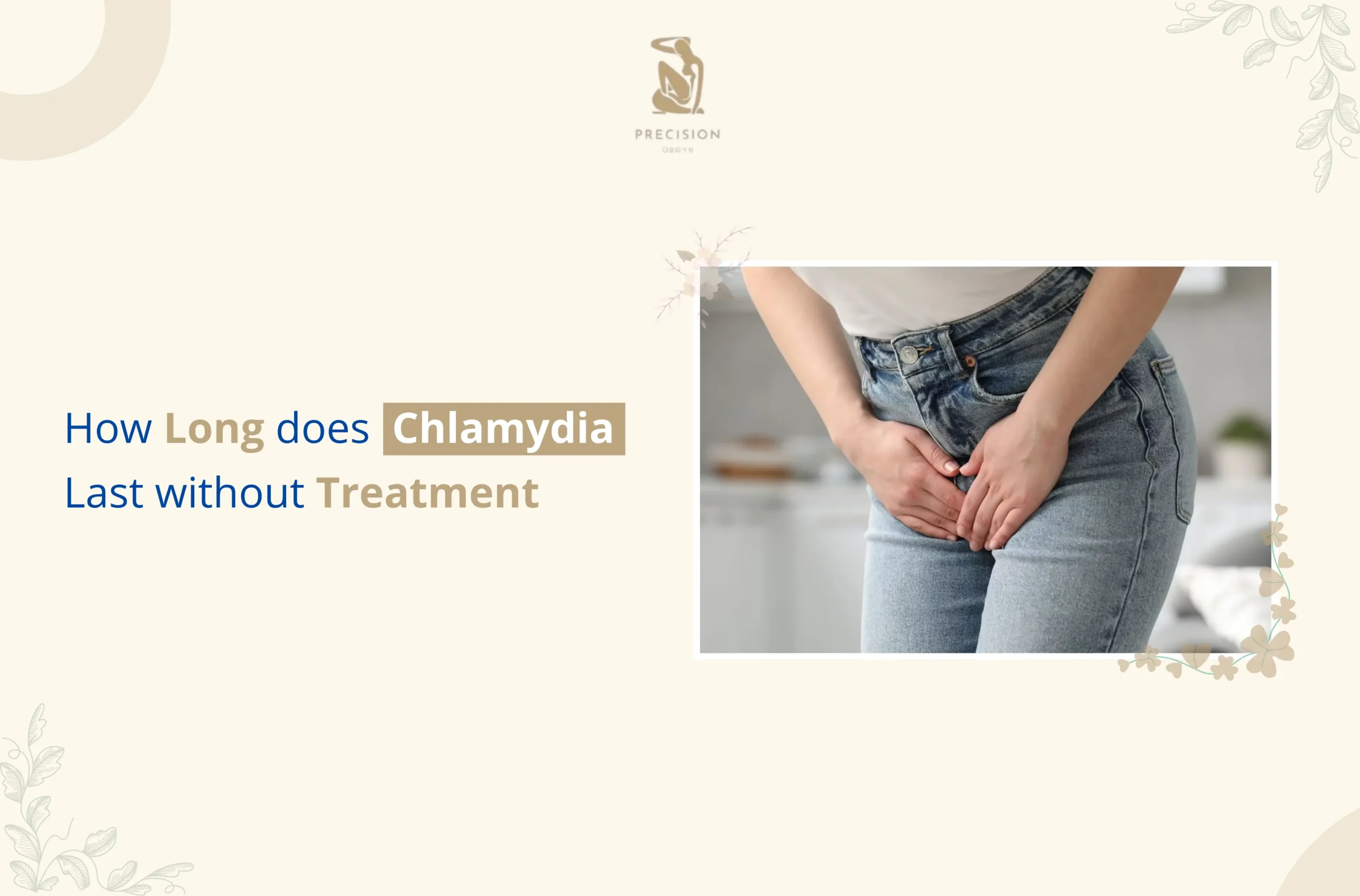
Chlamydia ranks among the most prevalent sexually transmitted infections (STIs). Many individuals remain unaware of their infection due to the absence of symptoms. This can lead to prolonged untreated cases.
A frequent inquiry is: How long does chlamydia last without treatment?
The infection can last indefinitely within the body if left untreated. It does not resolve naturally without antibiotics and may cause ongoing harm over time.
At Precision OBGYN, we offer confidential STI testing, precise diagnosis and tailored treatment to promote reproductive health.
What Is Chlamydia?
Chlamydia is an infection caused by bacteria called Chlamydia trachomatis.
It can affect both men and women. Women can have more serious problems if it is not treated. It can affect parts of the body like:
- Cervix
- Urethra
- Rectum
- Throat
- Reproductive organs
Can Chlamydia Go Away on Its Own?
Chlamydia does not usually go away by itself without treatment.
The CDC says chlamydia is a bacterial infection that won’t go away on its own. The infection can persist even if symptoms are absent or illness does not improve.
It is very common for many people to think that they are better when they really aren’t. Unfortunately, this is not the case. The infection may go on to cause continued damage to reproductive tissues without being known.
How Long Can Chlamydia Last Without Treatment?
If not treated, chlamydia may stay in the body for several months or years. The bacteria live within the cells of humans and continue to multiply.
The duration varies depending on factors such as:
- Immune system response
- Overall health
- Age
- Exposure to reinfection
- Presence of other infections
There is no natural time limit after which chlamydia disappears on its own.
Common Symptoms of Chlamydia
Some people have no signs at all. Others may notice small changes.
In women, signs may include:
- Strange fluid from private parts
- Burning when peeing
- Pain in the lower belly
- Bleeding that is not normal
In men, signs may include:
- Fluid from the penis
- Burning when peeing
- Pain in the testicles
These symptoms are minor and easily ignored. STI screening is vital for sexually active women.
What Happens If Chlamydia Is Left Untreated?
If chlamydia is not treated, it can cause serious health problems later.
Pelvic Inflammatory Disease (PID)
One big problem is called PID. This is when the infection spreads inside the body to parts like the uterus and fallopian tubes.
It can cause:
- Pelvic pain
- Internal scarring
- Long-term reproductive damage
- Fertility problems
Sometimes PID happens even if a person does not feel sick.
Trouble Having Babies
Untreated chlamydia can cause infertility in women. They can impede or ruin egg-moving tubes. This damage can be permanent.
Ectopic Pregnancy
It is another dangerous complication of chlamydia. This occurs when a kid grows outside the uterus. It’s really serious and it requires good medical attention.
Long-lasting Pain
For some, untreated chlamydia can mean lower belly pain lasting for a long time. This can make daily life difficult.
Higher Risk of Other Infections
Chlamydia can also lead to other sexually transmitted illnesses like HIV if untreated.
How Long Can You Have It for Years Without Knowing?
Yes. Many individuals live with chlamydia for years without realizing it due to the lack of signs. During this period, the disease may continue to cause internal damage.
Routine screening is especially recommended for:
- Sexually active individuals under 25
- Those with new or multiple partners
- Individuals with partners diagnosed with an STI
- Pregnant women or those planning pregnancy
Can Chlamydia Stop Periods?
Chlamydia does not directly stop menstrual periods, but it may cause:
- Irregular bleeding
- Spotting between periods
- Unexpected vaginal bleeding
Missed or irregular periods are more often associated with pregnancy, stress, or changes in a woman’s hormones, not with chlamydia.
Make sure to ask a healthcare professional to evaluate if there are any changes in your periods.
How Chlamydia Is Diagnosed
Healthcare providers typically diagnose chlamydia using:
- Urine testing
- Vaginal swab testing
- Cervical swab testing
These tests help doctors find the infection early. This is important so treatment can start fast and stop problems.
Chlamydia is usually treated with special medicine called antibiotics. The medicine works well for most people.
We offer confidential STI screening at Precision OBGYN in a supportive environment.
Final Thoughts
So, how long does chlamydia last without treatment? There is no set day count. It can stay in the body until it is treated. It may not cause pain right away.
Testing is an important step in protecting your health if you are sexually active or concerned about exposure.
Contact Precision OBGYN today to book a private STI screening or a full women’s health exam. Dr. Pierre Gordon and his trusted team are available to give you the expertise you need, custom direction and assistance.
FAQs
Can chlamydia be dormant for months?
Yes. It can remain in the body without symptoms but still cause harm.
Can chlamydia delay your period?
It usually does not delay periods. Irregular bleeding can occur from time to time; missed or late periods are more frequently caused by other factors such as pregnancy or hormonal changes.