Breast cancer will affect roughly one in eight women in the US at some point in their lives. That’s a number most people have heard. What gets mentioned less often is how sharply outcomes differ based on when it’s found. The American Cancer Society puts the five-year relative survival rate at 99 percent for localized breast cancer. Once it’s spread to distant organs, that falls to 32 percent. The same cancer, very different situations, and the biggest variable between them is usually how early it was caught.
Physical Changes That Need Attention
The bad news about early breast cancer is that you probably won’t notice it most of the time.
This is why it is important to have routine mammograms and why waiting for symptoms to occur is not a good idea.
However, at times physical changes occur and this is something that should not be overlooked, but monitored:
- A lump, knot or thickening in the breast or under the arm that did not exist before
- A difference in size and/or shape between one breast and the other that is noticeable to the patient or family member
- A dimpling, puckering, rough-looking skin on the breast, is the characteristic of this skin cancer
- Crusting, flaking or scaling around nipple or skin area
- An inverted nipple that previously faced outward and is now pulled inwards
- Any discharge from the nipple that isn’t breast milk, especially if it’s coming from just one side or has blood in it
- New, persistent breast pain (although it’s important to know that most breast pain is not cancerous)
None of this automatically means cancer. Most of the time it doesn’t. But these aren’t things to wait and see about either. Get them in front of a provider.
What’s Actually Happening During a Mammogram
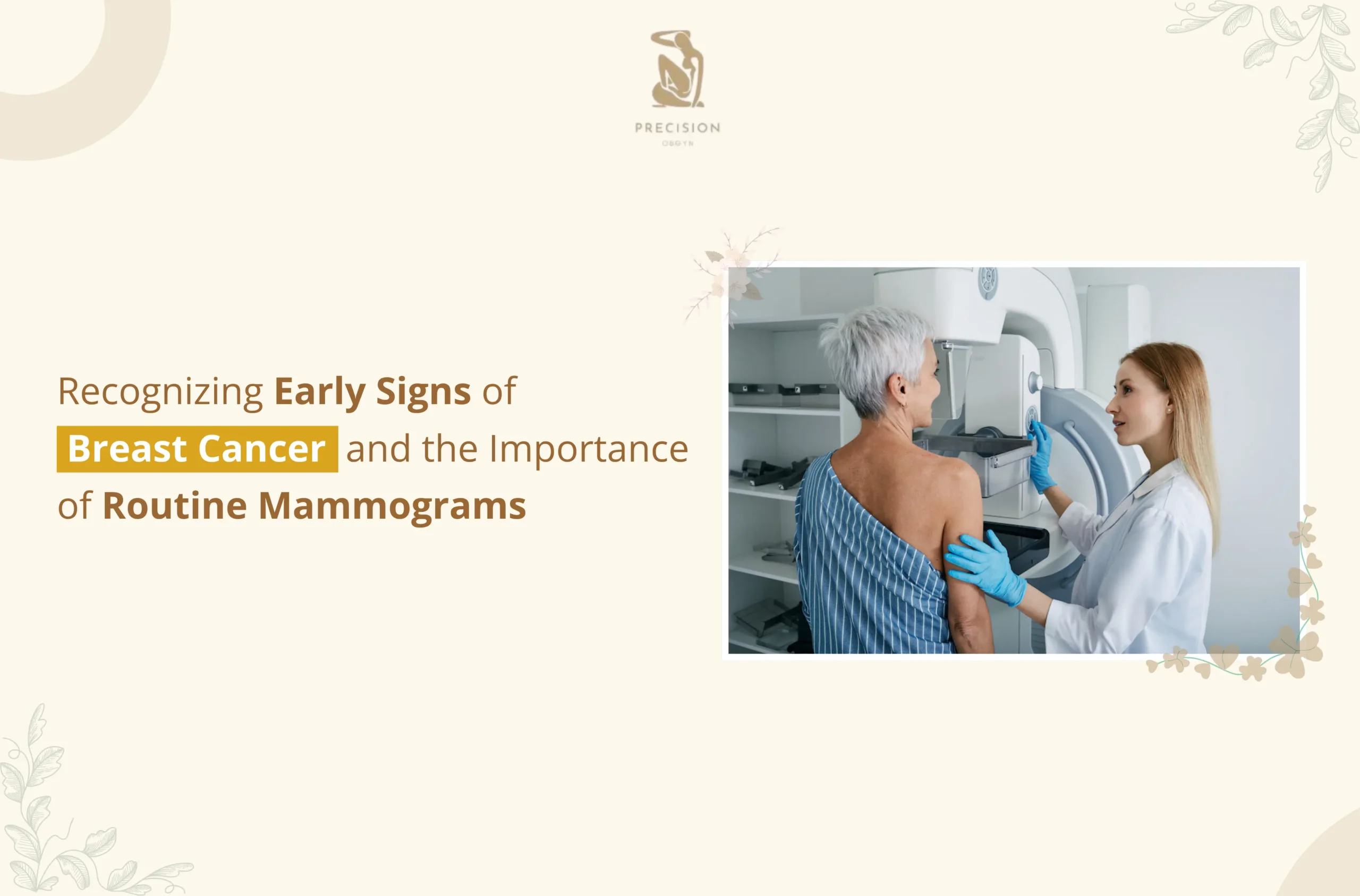
A mammogram is a procedure involving low-dose X-ray of the breast with the capture of an image. It’s so useful because it can detect microcalcifications, tiny spots of calcium in the breast tissue that may appear before the formation of a tumor, and can detect tumors years before they would become big enough to be felt, and can also reveal pre-cancerous changes early.
Regular mammograms produce 2D images. Also, 3D mammography, known as digital breast tomosynthesis or DBT, captures images in thin slices from many angles, rather than two flat views.
Screening: When and How Often
This is where it gets really confusing as large medical organizations don’t agree on a single answer. Each of them is getting to different conclusions:
- American Cancer Society: Mammograms at age 45 annually for average-risk women, and 40 annually if desired. Abnormal is considered to be every 2 years or annual, depending on age at 55 and older.
- American College of Obstetricians and Gynecologists: Mammograms recommended for women from 40 years of age, with frequency and timing determined by a patient-provider discussion based on each woman’s risk.
- US Preventive Services Task Force: in 2024, moved its recommendation to every two years beginning at 40 for average-risk women, changing from its previous guidance that had started screening later.
- Women at higher risk, whether from family history, a BRCA1, BRCA2, or PALB2 mutation, chest radiation received before 30, or dense breast tissue, may need to start earlier, screen more often, or add MRI to their annual routine.
Your gynecologist knows your history. They’re the right person to help you figure out which of these approaches actually fits you.
Dense Breast Tissue and Why It Complicates Things
Between 40 and 50 percent of women have dense breasts, which means their breast tissue has more glandular and fibrous content than fat. The problem on a mammogram is that dense tissue and tumors both appear white, so denser breasts can make cancers harder to see. And separately from the imaging issue, dense breast tissue itself raises breast cancer risk.
As of 2024, the FDA requires mammography facilities to tell patients in their results letter whether they have dense breast tissue. If yours says you do and your provider hasn’t brought up the idea of supplemental screening with ultrasound or MRI, that’s a conversation worth starting at your next appointment.
Risk Factors
Here’s something important to remember: Most women who are diagnosed with breast cancer do not have a major risk factor other than being female and aging. Risk increases as age increases and increases even faster after age 50. Risk factors in addition to that include:
- Personal history of breast cancer, or atypical ductal hyperplasia or lobular carcinoma in situ from a biopsy
- A mother, sister or daughter diagnosed with breast or ovarian cancer
- A known gene mutation in the BRCA1, BRCA2 or PALB2 gene
- Radiation to the chest before 30 years of age
- After menopause, using combined hormone therapy (estrogen plus progestin) for a long time
- If you’ve never been pregnant or experienced your first pregnancy at 30 or older
- Chronic drinking, with increased risk as amount of drinking increases
- Dense breast tissue
If several of these apply to you, it’s worth bringing that up with your provider, including whether genetic counseling makes sense given your family picture.
The Self-Exam Question
The American Cancer Society’s formal recommendation for a monthly, systematic breast self-examination was discontinued because studies indicated that it did not reduce breast cancer mortality rates and did increase biopsies of benign tissue. The advice that they now give you is called breast awareness—the ability to recognize how your breasts feel when they’re normal, and reporting changes or anything that feels unusual to your provider.
Precision OBGYN
Breast cancer screening is part of the well-woman care Dr. P.S. Gordon provides at Precision OBGYN, with offices in Miami and Aventura. That includes clinical breast exams, mammogram referrals, and personalized guidance on when to screen and how often, based on your specific history and risk factors.
Appointments are available Monday through Friday. Call or book online.
Phone – (305) 424-8622
Website – precisionobgynfl.com
Personalized and compassionate gynecologic care for women at every stage of life.