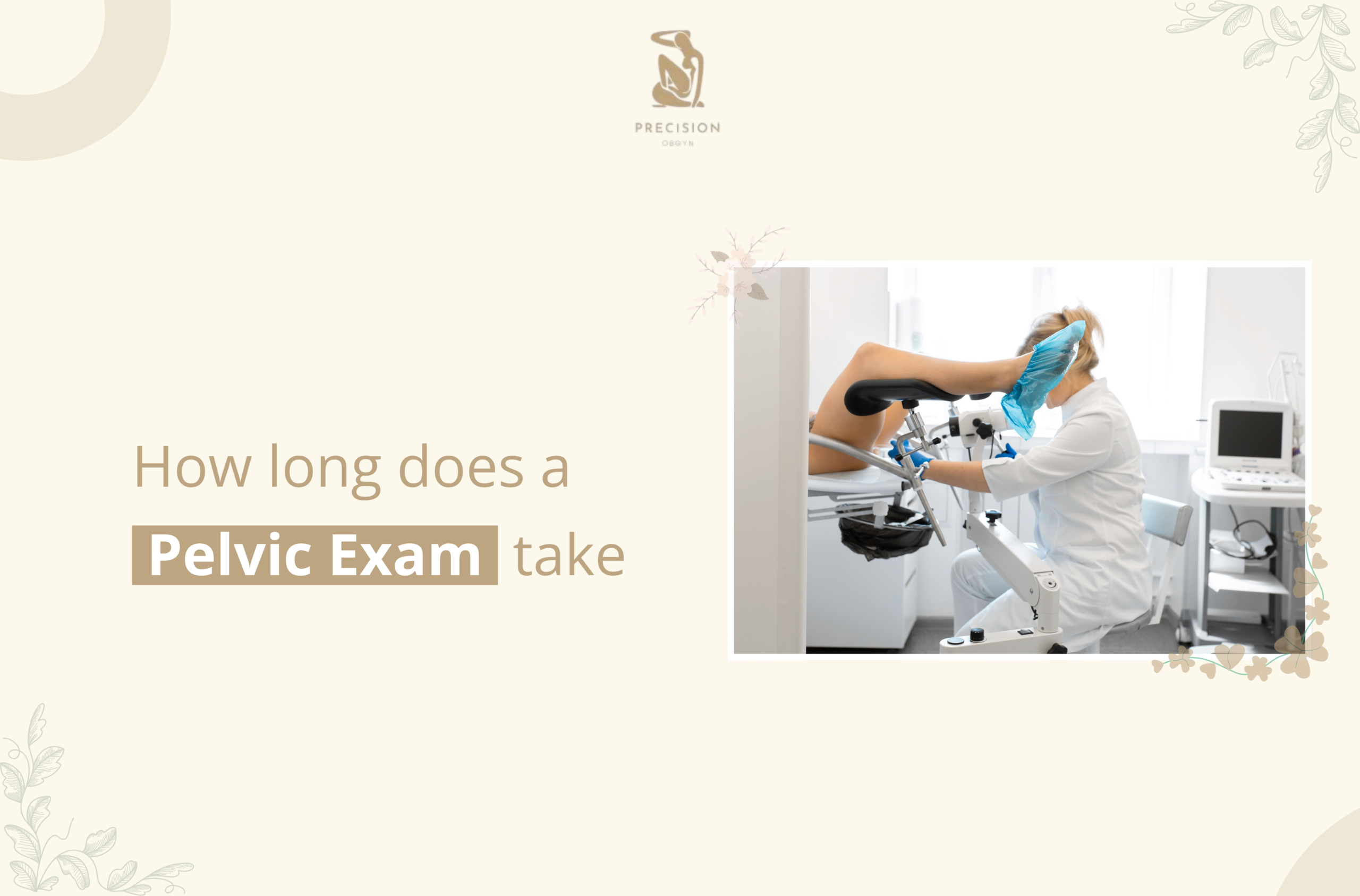
Many women ask, “How long does a pelvic exam take?” This is a very common question, especially for a first visit.
A pelvic exam is a simple check of a woman’s health. It helps the doctor look at the reproductive organs and find problems early.
At Precision OBGYN, a pelvic exam is often part of a yearly women’s checkup. We help women in Aventura and Miami feel safe and comfortable.
Let’s learn more about a pelvic exam.
What Is a Pelvic Exam?
A pelvic exam is a health check for women.
During the exam, the doctor checks:
- Vulva (outside area)
- Vagina
- Cervix
- Uterus
- Ovaries
This helps make sure everything is healthy.
Pelvic exams can help find infections or other problems early.
Why Do Women Need Pelvic Exams?
Pelvic exams help protect your health. They allow your doctor to look for problems before they become serious.
Your doctor may recommend a pelvic exam to:
- Check your reproductive health
- Screen for infections
- Look for unusual changes
- Help with pelvic pain
- Check abnormal bleeding
- Discuss birth control
- Support pregnancy planning
- Monitor menopause symptoms
These exams help women stay healthy and feel safe.
How Long Does a Pelvic Exam Take?
The pelvic exam is usually very quick.
Most exams last around 5 to 10 minutes.
But the whole visit may take longer. This is because the doctor may:
- Ask about your health history
- Check your blood pressure and weight
- Talk about periods or symptoms
- Discuss medications
- Answer your questions
- Perform other routine screenings
Some women might require extra time communicating symptoms, birth control choices, and plans around pregnancy or menopause issues. Around 30 to 60 minutes are spent during many of the annual well-woman visits.
At Precision OBGYN, we never rush your care. We take time to answer questions and help you feel comfortable.
What Happens Before the Pelvic Exam?
Before the exam, the doctor may ask simple questions like:
- Your menstrual cycle
- Pregnancy history
- Birth control
- Pain or discomfort
- Vaginal discharge
- Sexual health
- Menopause symptoms
The talk is valuable because it informs your doctor about your needs.
You will then change into a gown for the exam.
What Happens During a Pelvic Exam?
A pelvic exam has a few simple steps. Your doctor will explain what is happening during the visit.
External Exam
First, the physician examines the outside of the vagina. This will help to identify any swelling, redness, bumps, or changes.
Speculum Exam
Next, the doctor gently uses a tool called a speculum. It helps them see inside the vagina and cervix.
This may feel a little strange, but it should not be painful.
In some cases, the doctor may also take a Pap test during this procedure. A Pap smear collects a small sample of cells from the cervix to test for cervical cancer.
Internal Exam
During this step, the provider pushes one or two gloved fingers into the vagina and presses on the belly. This allows for measurement of the size, shape and location of the uterus and the ovaries. This is a very mild sensation and may be experienced on the first exam.
What Do Vaginal Swabs Test For?
Doctors take vaginal swabs during a pelvic exam to test for infections. These tests are important because many infections have no early symptoms.
Common infections detected include:
- Bacterial vaginosis (BV)
- Yeast infections
- Sexually transmitted infections (STIs) such as chlamydia and gonorrhea
- Trichomoniasis
- HPV-related cervical changes (when combined with Pap testing)
Swabs are usually quick and only take a few seconds to collect.
What is Pelvic Exam During Pregnancy
A pelvic test during pregnancy is a simple check done by a doctor. It is often done at the first pregnancy visit.
The doctor may:
- Check the health of the cervix (the lower part of the uterus)
- See how the uterus is changing
- Look for infections
- Make a basic check of reproductive health
The first gynecological exam during pregnancy is usually gentle and brief, with doctors avoiding internal exams unless necessary.
Does the Pelvic Exam Hurt?
Most women experience pressure, but not pain.
Feeling anxious is common for your first pelvic exam. Relaxing your muscles and focusing on deep breathing can be beneficial.
Report any pain to your doctor. At Precision OBGYN, we focus on your comfort and explain every step.
How Can You Prepare for a Pelvic Exam?
You can:
- Avoid creams or medicines in the vagina before the visit
- Avoid douching
- Avoid sexual intercourse for 24 hours before a Pap test
- Write down any questions or symptoms
You do not need special cleaning. Normal bathing is fine.
How Often Should You Get a Pelvic Exam?
Many women have a pelvic exam once a year.
Your doctor may suggest more or less often based on:
- Age
- Medical history
- Pregnancy plans
- Menopause symptoms
- Risk factors
At Precision OBGYN, we design customized health plans for all clients.
When Should You Call a Doctor?
You should contact a doctor if you have:
- Pelvic pain
- Unusual bleeding
- Strong vaginal odor
- Itching or burning
- Missed periods
- Pain during sex
- Unusual discharge
Do not wait for your yearly visit if something feels wrong.
Final Thoughts
A pelvic exam is usually a quick, simple and highly beneficial procedure for your health. The exam may last for 5-10 minutes and the entire appointment for an exam may last for up to 45 minutes.
Pelvic exams help find health issues early and support wellness. Many people feel nervous about them. Our team at Precision OBGYN makes your visit easy and relaxing.
We can help with a regular pelvic exam and pap test, preventative care, pregnancy counseling and support, or menopause management.
Call us for your annual well-woman exam.
FAQs
What is a speculum used for?
A speculum gently opens the vaginal walls so the cervix can be examined.
Is a Pap smear the same as a pelvic exam?
No. A Pap smear is a cervical cell test that is often performed during a pelvic exam.